A blog set out to explore, archive & relate plastic pollution happening world-wide, while learning about on-going efforts and solutions to help break free of our addiction to single-use plastics & sharing this awareness with a community of clean water lovers everywhere!

Thursday, August 27, 2015

The Plastic Ocean Index

Published on Algalita.org 8/2715
algalita_mapping_plastic_pollution.jpg

Algalita is developing the Plastic Ocean Index, a GIS (Geographical Information System) that will combine and present in-depth information about the presence of plastic in the world’s oceans.

This platform will allow Algalita and other plastic pollution researchers, including citizen scientists, to manage their data geographically. It is a dynamic tool that translates large amounts of information quickly and efficiently to reveal relationships, patterns, and trends.

The Plastic Ocean Index will provide an effective ongoing surveillance tool for
Algalita and will also be available on the Internet where it will be an easily accessible resource for educational purposes by students, educators, and scientists everywhere.

The Index is expected to launch July 2016.

Researchers Map Plastic Debris in Pacific Ocean

Published in Voice of America News Blog by Rick Pantaleo - August 24th, 2015
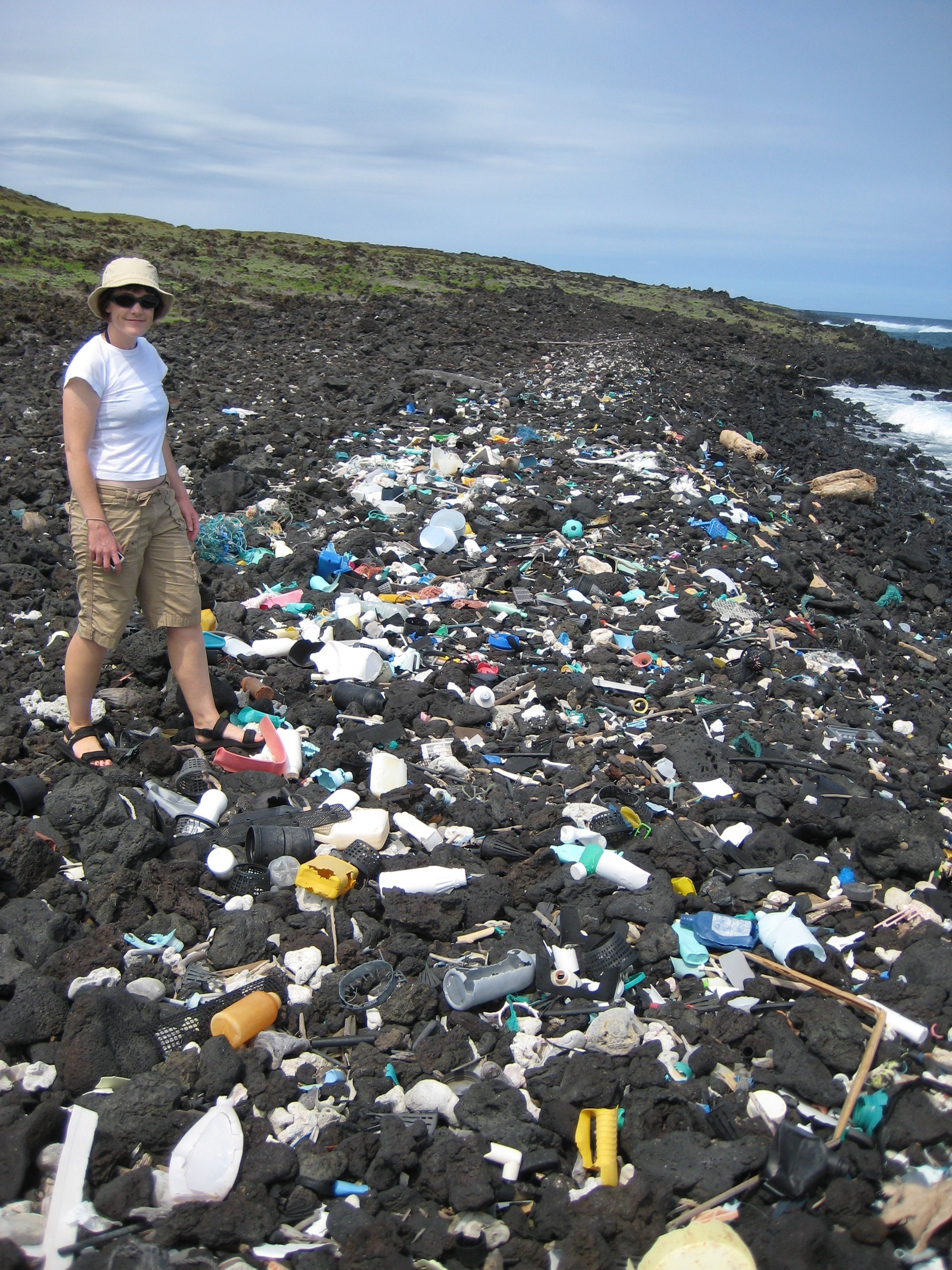
Plastic ocean debris littering Hawaiian shoreline. Hawaii is located near the center of the North Pacific gyre where debris tends to concentrate. (NOAA)

A team of volunteers, sailing in a flotilla of some thirty vessels, has successfully completed its month long research expedition through the western portion of the infamous Great Pacific Ocean Garbage Patch.

The first group of boats from the 30 vessel fleet, along with the Ocean Starr, a former NOAA research vehicle which served as the expedition’s “mother ship”, ended their journey when they sailed into in the port of San Francisco on Sunday, 8/23/15.

The Dutch environmental organization founded by Boylan Slat, called the Ocean Cleanup conducted its Mega Expedition Reconnaissance Mission through the massive collection of marine debris so that it could gather data to find out how much plastic is actually floating in the Pacific Ocean.

Nearly 8 million tons of plastic, mostly from land enters the ocean every year said a recent study.

Researchers say that portions of this huge collection of plastic, along with other forms of marine debris, gathers in five areas of the world’s oceans where the currents meet called the gyres.

A 2014 study found that currently there are at least 5.25 trillion pieces of plastic floating in the oceans with about third of it concentrated in the Great Pacific Garbage Patch.

The impacts of plastic pollution include harm to the environment, economy and human health.
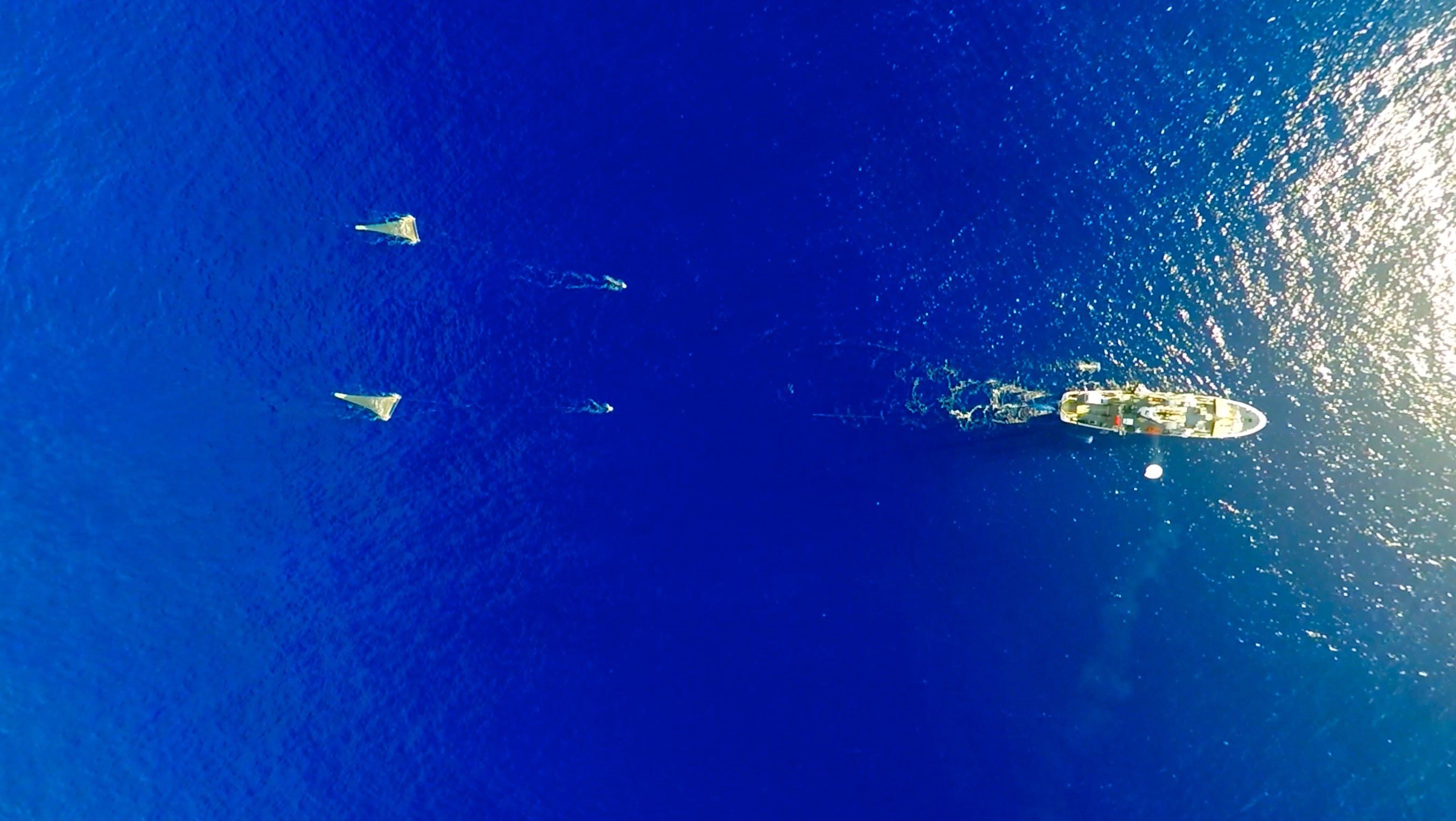
The Ocean Cleanup's Mega Expedition mothership R/V Ocean Starr is shown here deploying the two 6 meter-wide ‘mega nets’, two ‘manta trawls’, and its survey balloon with camera at the center of the Great Pacific Garbage Patch. ((C) The Ocean Cleanup/Skyframes)
The Ocean Cleanup’s Mega Expedition mothership R/V Ocean Starr is shown here deploying the two 6 meter-wide ‘mega nets’, two ‘manta trawls’, and its survey balloon with camera at the center of the Great Pacific Garbage Patch. ((C) The Ocean Cleanup/Skyframes)

About one million seabirds and one-hundred thousand marine mammals die every year due to plastic pollution, according to a 1997 study.

Toxic chemicals that are found in and can be amplified by the plastic pollutants enter the human daily diet through fish and other edible sea creatures who consume plastic polluted food.

Health effects that have been tied to these food borne chemicals include cancer, birth defects, immune system problems, and childhood developmental issues.

The Ocean Cleanup group plans to use the gathered data to create the first high-resolution map of plastic in the Pacific as well as to help in the preparation for the organization’s large scale ocean cleanup project that’s planned for 2020.

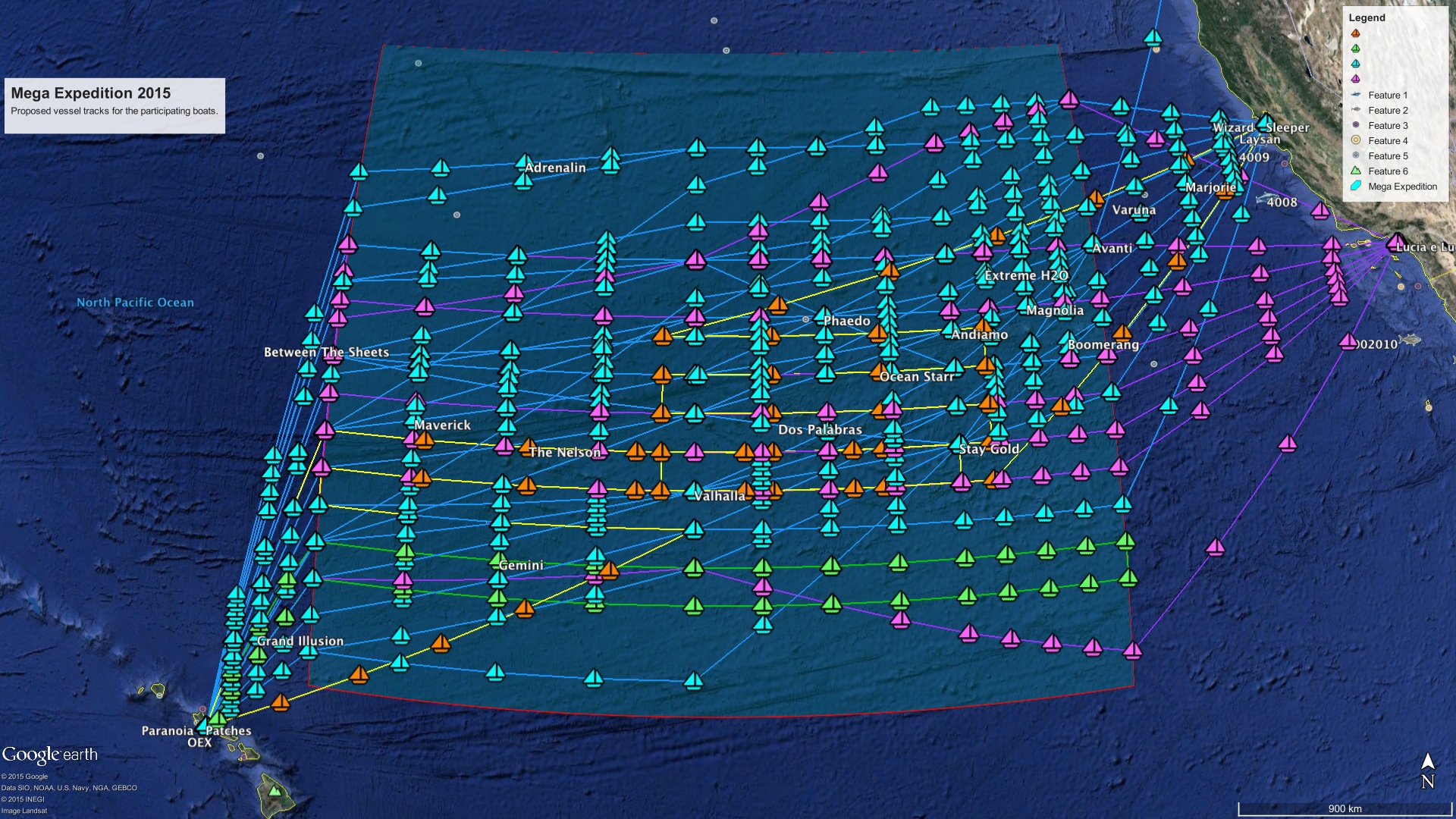
The thirty vessels sailed in parallel with each other over a 3.6 million square kilometer course in the Pacific Ocean. Over the month long period, the boats made around fifty crossings between the U.S. West Coast and Hawaii to conduct surveys on the amount of plastic they came across.
Map showing the 50 transects the Mega Expedition will perform based on routing information provided by the skippers before they left port.   Copyright: The Ocean Cleanup ((C) The Ocean Cleanup/Lys-Anne Sirks)
Map showing the 50 transects the Mega Expedition will perform based on routing information provided by the skippers before they left port.

Copyright: The Ocean Cleanup ((C) The Ocean Cleanup/Lys-Anne Sirks)

The expedition used a variety of measurement techniques to gather data.  Each of the boats towed a trawling net so that they could sample some of the smaller debris floating in the ocean. They tallied the larger pieces of debris with a special smart phone application called “The Ocean Cleanup survey app.”

To study large objects like ghost nets – fishing nets lost or left in the ocean – and debris from the 2011 Japanese Tsunami, the researchers also used an aerial camera system and giant nets that were aboard the Ocean Starr mothership.

According to a report from the Associated Press, most of the trash found by the expedition, including a one ton fishing net, were in medium to large pieces.

Rick Pantaleo
Rick Pantaleo maintains the Science World blog and writes stories for VOA’s web and radio on a variety of science, technology and health topics. He also occasionally appears on various VOA programs to talk about the latest scientific news. Rick joined VOA in 1992 after a 20 year career in commercial broadcasting.

Park Service to Big Water: No federal funding for bottled water bans? We’ll find our own money, thanks.

First, the National Park Service said it would cut back on selling its visitors bottled water to reduce the litter left behind.

Now, Congress — under pressure from the powerful bottled water industry — is threatening to cut off the federal money the Park Service is using to replace the disposable plastic water bottles with refilling stations.

But even if that happens, the Park Service said this week it will keep encouraging the parks to halt their bottled water sales, even with an edict from Congress. Park officials said they have such strong support for these bans that they would go it alone with help from friends and allies: the nonprofit groups that donate to park projects and the companies that have been selling the bottled water in the first place.

“We believe there are plenty of workarounds,” said Shawn Norton, the Park Service’s branch chief for sustainable operations and climate change. “We believe our friends groups and our concessionaires will step up if needed.”

[How Big Water is trying to stop the National Park Service from cleaning up plastic bottles that foul the parks]
The cost of buying, installing and maintaining the refilling stations now in about 20 parks would almost certainly come from the Park Service’s network of friends groups and concession companies that contract with the agency to sell food, drinks, gifts and supplies.

“I feel very confident that those dollars will start flowing,” Norton said.

The Park Service’s David vs. Goliath situation comes during a standoff between the agency and the $13 billion bottled water industry over a policy Park Service Director Jonathan B. Jarvis enacted four years ago. Facing overflowing garbage cans and ever-growing recycling and landfill costs, he told the 408 parks, national monuments and historical sites across the country that they could eliminate sales of disposable plastic water bottles, as long as refilling stations and reusable bottles replaced them.

About 20 parks have taken Jarvis up on the offer, including the Grand Canyon, Canyonlands, Arches, Zion and Bryce Canyon, with more in the pipeline, officials said. Refilling stations cost anywhere from $2,000 to $15,000, Norton said, depending on how much pipe must be laid to a water source, which often is a spring.

Things got ugly as the summer tourist season heated up: The International Bottled Water Association, which represents about 200 companies, mounted a full-court lobbying campaign on Capitol Hill to stop the Park Service’s latest effort at sustainability. The industry has found allies in House Republicans, particularly those with bottled water plants in their districts and states.

The hard work may pay off: Rep. Keith Rothfus (R-Pa.), whose state employs 6,800 people at bottled water companies, added a last-minute amendment this month onto a government appropriations bill pending in the House. The rider prohibits the Park Service from spending taxpayer money to implement any ban on sales of bottled water.

Joseph Doss, president and chief executive of the International Bottled Water Association, said that even if the Park Service can legally use private money to pay for bottled water alternatives, it should be careful about subverting the (possible) will of Congress.

“My thought would be, you certainly don’t want to be doing things that Congress has indicated they don’t want you doing,” Doss said Wednesday.

Contrary to what environmentalists might think, the bottled water industry is “a very small industry made up of very small, family-run, second- and third-generation businesses,” Doss said. (It does include companies with names such as Deer Park, Fiji and Evian.)

Some of the Park Service’s biggest food concessionaires seem to have their own sustainability agendas. At Colorado-based Xanterra, Vice President of Sustainability Catherine Greener called for some perspective.

“When guests started to come to these iconic places, there was no such thing as water in a PET bottle,” she said, referring to polyethylene terephthalate, a packaging plastic that can be recycled to reduce waste going into landfills.

Greener said that Xanterra has taken a financial hit in parks that no longer sell bottled water; but the company also works with the Park Service to install refilling stations as part of its contract.

“Like the paper versus plastic bag controversy, we want to minimize our carbon footprint,” she said. “Should the rider pass [Congress], we would work very closely with the Park Service to make sure we have the most sustainable option possible.”

Aramark, a concession company, installed refilling stations on its own at the six parks where it operates, including Denali, Yosemite, Glacier Bay and Olympic, spokesman David Freireich said. “We are moving away from plastic bottled water and introducing alternatives, such as resealable aluminum bottles, cans and cartons, and water fountains, water walls and filling stations.”

“As always, we’ll work with the NPS and our partners to develop a plan for installation of future refill stations,” if the measure in Congress moves forward, he said.

Acadia National Park in Maine has not stopped selling bottled water. “But if the Park Service came to us and said, ‘This is one of our top priorities,’ we would do it,” said Stephanie Clement, conservation director for Friends of Acadia, a nonprofit that raises money for park projects.

Clement has her own ideas about the will of Congress. “They’re responsible for funding and taking care of the parks,” she said. “I wouldn’t want to let them off the hook on this.”

The bottled water association, in a letter of complaint to Jarvis in April, alleged that the reduction in bottled water sales may be “having adverse impacts on public health and safety” by encouraging visitors to substitute “less healthy beverages” for “clean, healthy bottled water.”

Alex Shively, chief of staff for Rothfus, said of the newest Park Service plan, “If they can do it and it’s legal, fine. But the basic issue is, why are we discriminating against water if we think there’s a litter problem in the parks? Then they should ban concession stands.”

The bottled water association has spent about $510,000 to lobby members of Congress since 2011, records show, and the national parks are one of its top targets this year.

One place where the industry probably does not have to worry about losses to its bottom line is Big Bend National Park in west Texas, a weather-beaten desert.
“We don’t have much of a water supply,” said Arlene Griffis, a membership coordinator for Friends of Big Bend National Park. “If we had refilling stations, we would probably run out of water pretty fast. The park depends heavily on bottled water.”

Griffis was quick to note that the park “has an awesome recycling program. We’re not a bunch of people who drink water out of plastic bottles and throw them on the ground.”
Lisa Rein covers the federal workforce and issues that concern the management of government.

Wednesday, August 26, 2015

Millions Of 'Shade Balls' Protect LA's Water During Drought


Millions Of 'Shade Balls' Protect LA's Water During Drought
By deflecting UV rays, the opaque spheres are expected to protect more than 300 million gallons of water from evaporating in Southern California's harsh sunlight every year.Video: NowThis

Posted by The Huffington Post on Wednesday, August 12, 2015

The sea of 96 MILLION plastic balls that LA hopes will save it from drought:

Reservoir is covered in an ocean of black spheres to stop 300million gallons of water evaporating

  • Black plastic balls were this week released into the 175-acre Los Angeles Reservoir in Sylmar, California
  • They are designed to cover the water, prevent evaporation and protect it from dust, rain, chemicals and wildlife
  • The polyethylene balls, around the size of an apple, cost 36 cents each and are black to help deflect the UV rays

With no apparent relief to California's record-breaking drought, Los Angeles has turned to more unusual methods to protect the city's water.

Officials recently released 96 million floating 'shade balls' into the 75-acre Los Angeles Reservoir in Sylmar, California.
The black plastic balls are designed to help protect the water against dust, rain, chemicals and wildlife, as well as prevent 300 million gallons of water from evaporating each year. 

Scroll down for video 
With no apparent relief to California's record-breaking drought, Los Angeles has turned to more unusual methods to protect the city's water. City officials recently released ninety six million floating 'shade balls' into the Los Angeles Reservoir to cover the complex' water

HOW DO THE SHADE BALLS WORK? 

The plastic black balls, around the size of an apple, cost 36 cents each.
They floating on the surface and block the sun's rays to prevent water from evaporating.
By doing this, they prevent the chemical reaction that creates the carcinogenic compound bromate.
The balls also form a protective barrier across the surface that helps keep birds, animals and other contaminants out away. 
The balls work by floating on the surface and blocking the sun's rays.

As well as protecting against evaporation, they also prevent the chemical reaction that creates the carcinogenic compound bromate.

For most people, exposure to bromate - created from naturally-occurring bromide in water -is unlikely to be cause problems.

But some people who ingest large amounts of bromate have suffered nausea, vomiting, diarrhea and abdominal pain.

The balls also form a protective barrier across the surface that helps keep birds, animals and other contaminants out.

Dr Brian White, a now-retired Los Angeles Department of Water and Power (LADWP biologist), was the first person to think of using shade balls for water quality.

The idea came to him when he learned about the application of 'bird balls' in ponds along airfield runways.

His in-house solution has been used in LADWP's open-air reservoirs since 2008 to block sunlight, prevent chemical reactions and curtail algae blooms.

The balls, around the size of a large apple, cost 36 cents each and are black because it is the only colour that is able to deflect UV rays. 

Around 20,000 polyethylene balls were released into the Los Angeles reservoir at the Van Norman complex in Sylmar, California, yesterday
They balls work by floating on the surface and blocking the sun rays to prevent the water from evaporating. By doing this, they also prevent the chemical reaction that creates the carcinogenic compound bromate. 

They are currently in place at Upper Stone, Elysian and Ivanhoe reservoirs, and come with the added benefit of reducing evaporation off the reservoir surfaces by 85 to 90 per cent.

Mayor Eric Garcetti joined officials yesterday to release the final 20,000 shade balls as part of the region's $34.5 million water quality protection project.

'In the midst of California's historic drought, it takes bold ingenuity to maximize my goals for water conservation,' Garcetti said.

'This effort by LADWP is emblematic of the kind of the creative thinking we need to meet those challenges.'

The polyethylene balls are expected to save $250 million when compared to other, similar techniques to protect the water.

These include splitting the reservoir into two with a bisecting dam; and installing two floating covers that would have cost more than $300 million.

'In addition to cutting back on the need to chemically treat our water to prevent natural occurrences like algae, these shade balls are a cost-effective way to reduce evaporation each year by nearly 300 million gallons, enough to provide drinking water for 8,100 people for a full year,' added Councilman Mitch Englander.

The balls are made of polythene and cost 36 cents each. The are black because it is the only colour that is able to deflect UV rays
The balls are made of polythene and cost 36 cents each. They are black because it is the only colour that is able to deflect UV rays

Dr Brian White, a now-retired LADWP biologist, was the first person to think of using shade balls for water quality.  The idea came to him when he learned about the application of 'bird balls' in ponds along airfield runways.

Mayor Eric Garcetti (right) joined officials yesterday to release the final 20,000 shade balls as part of the region's $34.5 million water quality protection project. 'In the midst of California's historic drought, it takes bold ingenuity to maximize my goals for water conservation,' Garcetti said. 'This effort by LADWP is emblematic of the kind of the creative thinking we need to meet those challenges'

Pictured is an aerial view of the reservoir showing the shade balls in position. The polyethylene balls are expected to save $250 million when compared to other, similar techniques to protect the water


Read more: http://www.dailymail.co.uk/sciencetech/article-3194098/Could-plastic-balls-bring-relief-drought-stricken-California-Los-Angeles-releases-96-million-spheres-protect-reservoir-water.html#ixzz3jxg8hNF7 
Follow us: @MailOnline on Twitter | DailyMail on Facebook


Tuesday, August 25, 2015

Ship returns after monthlong study of plastic garbage in Pacific Ocean

Published on mlive by The Associated Press on August 24, 2015 
 
SAN FRANCISCO — Far away from California's coast, where the Pacific Ocean currents swirl, the blue of the sea was replaced by fishing nets, buckets, buoys, laundry baskets and unidentifiable pieces of plastic that floated past the Ocean Starr, a ship carrying a team of scientists and volunteers gathering data on plastic garbage.
 
"We were surrounded by an endless layer of garbage," sad Serena Cunsolo, an Italian marine biologist who works for The Ocean Cleanup. "It was devastating to see."
 
Cunsolo, 28, was one of a team of 15 researchers and volunteers aboard the Ocean Starr who a month ago set out from San Francisco to study the plastic waste as part of the "Mega Expedition," a major step in the organization's effort to eventually clean up what's known as the Great Pacific Garbage Patch.
 
The 171-foot mother ship, carrying massive white bags filled with plastic garbage, returned on Sunday to San Francisco along with two sailing boats with volunteers who helped collect the garbage samples.
 
Most of the trash they found, including a 1-ton fishing net, is medium to large-sized pieces, as opposed to confetti-like plastic shards that can easily enter the food chain after being eaten by small fish and birds and are extremely difficult to clean up, said Boyan Slat, who founded The Ocean Cleanup and has developed a technology that he says can start removing the garbage by 2020.
 
"It was a good illustration of why it is such an urgent thing to clean up because if we don't clean it up soon then we'll give the big plastic time to break into smaller and smaller pieces," Slat said.

Volunteer crews on 30 boats have been measuring the size and mapping the location of tons of plastic waste floating between the West Coast and Hawaii that according to some estimates covers an area twice the size of Texas.

Slat said the group will publish a report of its findings by mid-2016 and after that they hope to test out a 1-mile barrier to collect garbage near Japan. The ultimate goal is the construction of a 60-mile barrier in the middle of the Pacific.

The expedition was sponsored by The Ocean Cleanup, an organization founded by Slat, a 21-year-old innovator from the Netherlands who has envisioned using long-distance floating barriers that will attach to the seabed with an anchoring system used by oil-drilling rigs. The devices will target ocean currents full of waste and skim garbage from the surface while aquatic life and the currents themselves pass underneath.

He first became passionate about cleaning the oceans of plastic while diving in the Mediterranean Sea five years ago. "I was diving in Greece and realized that there were more plastic bags than fish, and I wondered why can't we clean this up," Slat said.

After dropping out of university after his first six months, Slat dedicated his life to developing the technology the group will start testing next year.

He decided to launch a kickstarter campaign and raised 2 million euros (about $ 2.27 million) that helped to launch his organization thanks to the success of a 2012 Ted Talk he gave about his idea that was viewed more than 2 million times. Soon, his innovative solution got the attention of major philanthropists in Europe and Silicon Valley, including Salesforce.com CEO Marc Benioff, who are helping pay for the data-gathering efforts and the technology's development.

The Pacific expedition, which will end in mid-September, will gather data that will be more extensive than what has been collected in the past 40 years. It also will give a better estimate of the how much plastic waste is in the Pacific Ocean, Slat said.

The boaters are using GPS and a smartphone app to search for and record the plastic. They take samples and ship them to the Netherlands, where the plastics are counted and recorded.

The Great Pacific Garbage Patch was discovered by Charles J. Moore in 1997 as he returned home from the Transpacific Yacht Race, which starts in Los Angeles and ends in Honolulu.

Monday, August 24, 2015

Watch the ocean's five islands of garbage form over the last 35 years


Published in Gizmodo by Casey Chan
Watch the ocean's five islands of garbage form over the last 35 years1
The ocean is filled with alien-looking creatures, a lot of natural beauty and a crap ton of garbage. There is so much garbage in the ocean that fully formed patches of our filth have spawned. In this fascinating visualization, NASA reveals how the ocean’s 5 islands of garbage came to be. You can see the swirling pattern of the ocean cause a natural graviation of garbage to each other as they settle down in different parts of the world.
We start with data from floating, scientific buoys that NOAA has been distributing in the oceans for the last 35-year represented here as white dots. Let’s speed up time to see where the buoys go...

...If we let all of the buoys go at the same time, we can observe buoy migration patterns. The number of buoys decreases because some buoys don’t last as long as others. The buoys migrate to 5 known gyres also called ocean garbage patches.