A blog set out to explore, archive & relate plastic pollution happening world-wide, while learning about on-going efforts and solutions to help break free of our addiction to single-use plastics & sharing this awareness with a community of clean water lovers everywhere!
On Friday, December 18th history was made. The Senate
approved a bill - which is now awaiting the President's support - to
phase out personal-care products such soaps, body washes, toothpaste and
more, containing plastic microbeads in 2017.
(note from Melanie: The bill phasing out the manufacture of beauty products with plastic microbeads by July 1, 2017, and the sale of such products by July 1, 2018. The Microbead Free Waters Act
(H.R. 1321) bans all plastic microbeads in beauty products, including
those made from so-called “biodegradable plastics,” the majority of
which do not biodegrade in marine environments.)
This comes on the heels of
the House of Representatives' decision, just one week earlier, to pass a
bill to ban microbeads too, including so-called "biodegradable" plastic
microbeads.
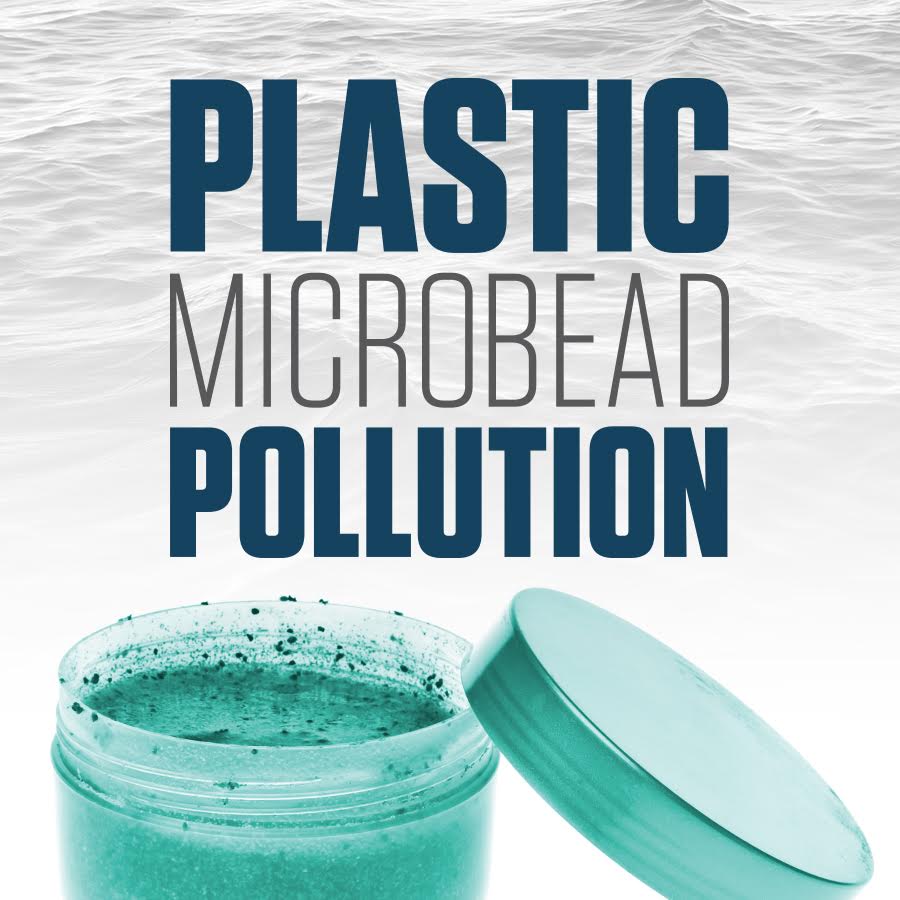
Why is everyone working to "ban the bead?" Super
tiny, but insidiously dangerous, these long-lasting micro-plastic
particles wash down our drains, and because they are too tiny to be
filtered by municipal sewer systems, they travel directly into the
ocean. That is when the real damage begins.
Often mistaken as fish eggs,
marine life "eat" the microbeads, which are known to absorb toxins. But
things don't stop there. The toxin-filled microbeads travel up the food
chain to us, as we're likely to then eat seafood that have ingested
these microscopic bits of plastic.
Nine states have already
outlawed microbeads and it is great to see a ban being considered at the
federal level. But some are questioning if the laws are moving fast
enough. The federal bill, if it becomes law, isn't slated to go into
effect until 2017 and California, one of the largest states to pass a
law, which happens to be one of the most stringent, is set to start in
2020.
Even with all this progress, the question that must be
asked is, "What damage will occur before the microbead bans go into
effect?"
Here are some facts to consider:
1. Researchers at
State University New York, Fredonia calculated an average of 17,000
microbeads per square kilometer in Lake Michigan.
2. A report
published by the College of Science at Oregon State University found
that eight billion microbeads are sent into aquatic environments each
day in the U.S. This number translates to approximately 2.9 trillion
beads per year, which according to an article written by Oregon State
University is "enough to wrap the Earth more than seven time if lined up
end to end."
3. Science Alert equates the eight billion
microbeads sent into our waters each day as "enough to cover more than
300 tennis courts."
4. Litter, including plastics and microbeads,
are already costing each one of us. The Natural Resources Defense
Council estimates that 95 communities in California have already spend
$428 million per year to prevent litter from becoming pollution. Imagine
what total cost would be for all of California, or the rest of the
United States! By avoiding waste in the first place, this money could be
put toward other issues. We just need to make better choices when it
comes to avoiding single-use plastics and microplastics in the first
place.
For these reasons, there is no need to wait for laws to
pass and be enacted. Each of us can stop microbeads from entering our
waters today. It's simple. Do not buy products - ranging from
toothpaste to body scrubs to face wash - that contain them. It's time to
start checking your labels. If you see the words "polyethylene" or
"polypropylene," which represent microbead materials, choose another
item.
While each of us take personal action to become more
thoughtful consumers and shoppers, the Surfrider Foundation will
continue to advocate for microbead regulation while we wait for
President Obama to sign this bill into law. It's all hands on deck to
rid the world of this senseless and avoidable form of plastic pollution.
Published in EcoWatch.com on March 30, 2015 by Staley Prom, Surfrider Foundation
There are currently numerous state bills introduced around the country focused on curbing marine plastic pollution. One notably popular subject this session is that of microbeads,
which are teeny tiny bits of plastic put in consumer products such as
toothpastes and facial scrubs, which (likely unbeknownst to consumers!)
wash down the drain, are frequently not captured by wastewater treatment
facilities (because they’re too small, do not biodegrade, and float),
simply pass through wastewater treatment facilities, and eventually
enter our waterways and pollute our oceans. These microplastics are found in all ocean gyres, bays, gulfs and seas around the world. Microplastics are found in all ocean gyres, bays, gulfs and seas around the world. Photo credit: Surfrider Foundation
This is problematic for a multitude of reasons. First, plastic does
not biodegrade into elements or compounds commonly found in nature like
other organic materials, but instead, photodegrades into smaller pieces
of plastic causing pollution that is virtually impossible to remediate.
Second, microplastic debris absorbs toxic, environmentally persistent
chemicals such as DDT, PCBs, PAHs, and flame retardants found in our
waterways. In 2011, the National Oceanic Atmospheric Association found
that plastic debris accumulates pollutants such as PCBs up to 100,000 to
1,000,000 times the levels found in seawater.
Thus, aside from the negative effects of plastic consumption by marine life
such as intestinal clogging and starvation, fish can become
contaminated by the plastic’s absorbed toxins, which bioaccumulate up
the food chain. These toxins pose dangerous threats to humans and
wildlife who consume them. Microplastics? Megaproblem.
Currently, there are at least 15 microbead bills pending at various stages across the country. Below is a sampling of some of these bills. While, as explained below, Surfrider Foundation
has concerns associated with some of the bills, Surfrider is hopeful
that states will carefully draft bills that will address the very
serious threats that microplastic pollution poses to our coastal
resources and water quality.
Connecticut
Connecticut currently has four microbeads bills in the works: House Bill (H.B.) 6081, H.B. 5206,H.B. 5403, and H.B. 5727.
On March 10, 2015, Surfrider Foundation submitted testimony to the
Joint Committee on the Environment supporting the bills, with
amendments. Surfrider’s concerns with the bills primarily focus on any
exceptions or exemptions for “over the counter” drugs or “biodegradable”
particles. First, there must not be any exemptions for over the counter
products, as this creates a huge industry loophole, rendering any
microbeads ban futile, since the number of over the counter drugs is
incredibly broad, and contains numerous types of products such as
fluoride and whitening toothpastes, acne scrubs, moisturizing cleansers,
and wrinkle creams, which are the exact kinds of products which
typically utilize microbeads. Secondly, any exemptions for biodegradable
particles are concerning, because “biodegradable” can be a misleading
term. Any microbead legislation should only include a biodegradable
exception if the term is carefully defined in a way to ensure that only
products which are truly able to break down into natural elements in the
marine environment or in wastewater treatment are considered
biodegradable.
Hawaii
Recently, on March 18, Surfrider Foundation submitted testimony in strong support of Hawaii’s microbead bill, H.B. 621,
with amendments, to the Energy and Environment Committee, and Commerce
and Consumer Protection Committee. The bill gradually (i.e. between
December 31, 2017 and December 31, 2019) phases in the prohibition on
the manufacture and sale of personal care products that contain
“synthetic plastic microbeads.” “Synthetic plastic microbead” means any
intentionally added non-biodegradable solid plastic particle measuring
less than five millimeters in size and used to exfoliate or cleanse in a
rinse-off product. Violations are punishable by civil penalties up to
$1,000 for a first violation, and up to $2,500 for subsequent
violations.
As noted above, this microbead definition, which excludes
“non-biodegradable” particles is potentially problematic. Thus, the
Surfrider Foundation proposed in its testimony that the legislators must
either remove the vague, misleading term “non-biodegradable” in the
definition of “synthetic plastic microbead” and replace it with
“non-compostable,” or define “biodegradable” as “capable of decomposing
back into natural elements.”
Oregon
Similarly, in Oregon, H.B. 3478 was
first read March 2, 2015, and was referred to the Energy and
Environment Committee March 9, 2015. The bill phases in the prohibition
on the manufacture and sale of personal care products and over the
counter drugs that contain synthetic plastic microbeads. Currently, the
definition of “synthetic plastic microbead” means “a solid plastic
particle that a manufacturer intentionally incorporates into a personal
care product and that: (A) Measures less than five millimeters in
diameter; (B) Is not biodegradable; (C) The manufacturer intends as a
method for exfoliating skin or otherwise cleaning the human body; and
(D) The manufacturer intends for the consumer to rinse off from the body
after use. Thus, the definition excludes particles which are
“biodegradable.” As noted above, this is potentially vague and
problematic, and any microbead legislation should ensure that the ban
applies to all microplastic particles, and that only products which are
truly able to break down into natural elements are excepted. The
Surfrider Foundation, on behalf of the Oregon Surfrider Foundation
Chapter Network, and the individual Oregon chapters have expressed these
concerns in personal letters to their state legislators, and Surfrider
Foundation staff will be participating in a work group on this bill in
the future.
Washington
Meanwhile, Washington’s microbead bill, Senate Bill (S.B.) 5609 passed
the Senate unanimously on March 11, 2015. In the House, the bill had
its first reading and was referred to the House Committee on the
Environment on March 13. The Committee recently held a public hearing on
the bill on March 23, 2015.
Unfortunately, S.B. 5609 passed the Senate with a potential
“biodegradable” loophole, similar to Hawaii and Oregon’s microbeads
bills. The definition of the banned “synthetic plastic microbead”
excludes biodegradable particles (i.e., synthetic plastic microbead
means “an intentionally added nonbiodegradable solid plastic particle
measuring less than five millimeters in size and used to exfoliate or
cleanse in a rinse-off product”), which, again, could be problematic
without further clarifying what is biodegradable and what is
nonbiodegradable.
The Surfrider Foundation will continue to monitor these, and other
proposed microbeads bills, and bring awareness to these issues such that
legislators will be encouraged to craft effective bills that serve
their intended purposes. Go here for more information on the dangers of marine plastic pollution, and on Surfrider Foundation’s Rise Above Plastics campaign.
Published on ecowatch.com By Bill Hickman - July, 31, 2013
Surfrider chapters typically focus their plastic reduction efforts in coastal cities
and towns since that’s where our members are who see the impacts of
plastic pollution firsthand and want to take action. You have to start
somewhere and as a grassroots organization, that somewhere is our
backyard.
But it’s important to remember that everywhere on land is part of a
watershed that flows to a river, creek or stream that then outlets in a
lake, bay or ocean. So it’s great to see inland cities making efforts to
reduce single-use plastic bags and the latest good news comes from the west Texas city of Kermit where a reusable bag ordinance has been enacted.
In addition to marine impacts, plastic bags can be a big nuisance for
farmers. I recently spoke with some Surfrider activists in Texas who
mentioned that cotton farmers can take a financial hit from plastic bag
litter because it can taint their crop as it is processed by mills:
Bags find their way into farmers’ fields
and then into modules of cotton. The bags go through the gin and textile
mills and have even ended up in finished apparel. One thing that I
would really like to emphasize this fall is to watch for those Wal-Mart
bags in your fields. It’s almost humorous, but it’s dead serious. One
mill in the east quit buying cotton in Georgia and the Carolinas because
of it.
Kermit recently passed
a type of reusable bag ordinance that eliminates plastic checkout bags
at most retailers and puts a small fee on paper bags as an incentive for
people to remember their reusable bag or go without a bag for small
purchases. The City of Kermit website does a great job to explain the ordinance and why it’s needed:
Q: What kind of plastic bag is banned? Plastic
carryout bags include any bag made of plastic (from any source), which
is provided to the customer at the point of sale.
Q: What kind of plastic bag is NOT banned?
Produce bags and product bags are bags without handles used exclusively
to carry produce, meats or other food items to the point of sale or to
prevent such food items from coming into direct contact with other
purchased items.
Q: Why has the City of Kermit banned single-use plastic carryout bags?
The intent of the single-use carryout bag ordinance is to significantly
reduce the environmental impacts related to single-use plastic and
paper carry out bags and promote a major shift towards the use of
reusable bags.
Q: How are single-use plastic carryout bags harmful to the environment?
They are consumed in extremely high volumes. They are produced from
non-renewable resources. They are designed to be disposable (rather than
reusable). They are difficult to recycle—less than 5 percent of the 19
billion plastic bags used annually in Texas are actually recycled. They
are a significant and visible component of litter and do not biodegrade.
They remain in the environment as marine, storm drain and beach
pollution for decades. A significant hazard to ranch animals and birds,
which often mistake plastic bags as food.
Q: Is there any exception to this ban? The
ordinance does NOT prohibit the distribution of plastic product bags
such as those distributed within a grocery store for bagging produce or
meat.
Q: What stores are required to charge 10 cents for each recycled paper bag?
All grocery stores, convenience stores, minimarts, liquor stores, drug
stores and pharmacies are prohibited from providing free distribution of
single-use paper and plastic carryout bags. If these stores decide to
make paper carryout bags available for their customers, they are
required to sell recycled paper carryout bags made from 100 percent
total recycled content with 40 percent post-consumer recycled content
for not less than 10 cents per bag.
Q: Why is there a $0.10 fee on recycled paper carryout bags?
The fee of $0.10 on recycled paper carryout bags encourages the use of
reusable bags. This cost pass-through reimburses retailers for the costs
of providing recycled paper carry out bags to their customers. All of
the revenue from the cost pass-through remains with the store.
Q: How do I avoid paying 10 cents for each recycled paper bag?
It’s easy—remember to bring your own reusable bags to the store. Some
stores will even offer you a credit or gift for bringing your own bag.
Visit EcoWatch’s BIODIVERSITY page for more related news on this topic.