A blog set out to explore, archive & relate plastic pollution happening world-wide, while learning about on-going efforts and solutions to help break free of our addiction to single-use plastics & sharing this awareness with a community of clean water lovers everywhere!
Showing posts with label Remembering your Reusable Bags. Show all posts

Monday, June 25, 2012

7 Recycling Tips In Honor Of World Oceans Day


Credit: SF Brit / Creative Commons

Friday, June 8th is World Oceans Day. Although only one day a year is officially set aside for celebrating and honoring our world’s oceans, there are steps that each of us can and should be taking every day to help protect and preserve the integrity of the oceans and the life it supports. On that note, here are 7 recycling tips to get you on your way:

1 – First step is to get yourself educated. Learn about all the different items that can be recycled and find out how and where you can recycle them.

2 – Set up a designated recycling bin in your home. You and your family will be more likely to recycle items if you have a bin for recyclables. Even the kids will quickly learn what to recycle.

3 – When you are out and about, be sure your trash and recyclables make it into the proper bins so that none of them end up on the ground, in the local lake or river, on the beach, in the ocean or anywhere else in nature.

4 – Invest in a reusable water bottle. Why waste money on a plastic water bottle when you can buy a reusable water bottle that you can fill up anytime you need it. They are easy to take with you and will save a lot of time, money and plastic waste.

5 – Cut down on “single use” items. No more plastic utensils, paper plates, straws, plastic bags, and other items. A prime example is the single wrapped food item, such as cheese slices. You’ll save a lot of plastic when you buy a block of cheese and slice it yourself.

6 – When you go out to the park, on a picnic, hiking or any other outdoor activity, be sure to follow the “leave no trace” motto and pick up after yourself. By packing your own reusable containers you will have less waste and it will be less work all around.

7 – Participate in or organize an aquatic clean up event at your local beach, lake, or waterfront. This is a great way to get involved, with the community, to help keep the oceans and water clean. You should also rally to get permanent recycling containers set up (if they don’t already exist).
or those of you who want to take extra steps towards helping protect our oceans, you can download the Monterey Bay Aquarium’s Seafood Watch app so you know which restaurants serve ocean-friendly seafood and sushi.

Then make the seven C’s pledge for ocean conservation. Commit to making a real difference, conserve in your own home, be a conscious consumer, communicate your concerns and interests, challenge yourself on a daily basis, connect with your local community and celebrate the oceans!
Last but not least, wear blue this Friday to show your support for World Oceans Day and at your earliest convenience, visit the ocean (or your local lake) to help remind yourself why you recycle and take the steps you take to help protect the oceans and Earth itself.

[Source: Bio Friendly Blog]

Wednesday, May 23, 2012

Plastic Oceans (Plastic in our playground!) Part 1 - Plastic bags

posted in www.sail-world.com by Ian Thomson on May 20, 2012


'Plastic in the sea'   

The ocean is our playground. We sail on it, we swim in it, we fish from it and without it we don't have 60-80% of the world's oxygen........So why do we abuse it?

The reason we abuse it is because most of us don't even realise we are. Covering 70% of the planet, our oceans seem to cope with everything we throw at it, right? Well think again.

So let's go back to the beginning. When we were kids at school we were all taught to clean up all the trash in our playground. So why did we change as we grew older. For many of us sailors, the ocean is our new playground, yet we throw our trash in it all the time, not directly, but we certainly contribute.

Let's pick two items that are incredibly numerous in our oceans and cause great issues for creatures living in the ocean and the ocean itself, let alone creating health risks to us.

Plastic bags and plastic water bottles What do these items have in common? They have both been created for 'Convenience'.

IMG 2244 - Ocean Crusaders -  Ian Thomson  
This is where it all began for Ocean Crusaders. As a professional skipper in the Whitsundays I began pulling Dead Sea turtles out of the water so they could be inspected by marine parks. The key moment came when one of the turtles I pulled out was found to have a plastic bag formed perfectly in its stomach. It had died of starvation but not before trying to eat 12 cigarette butts, a plastic water bottle cap and 1/2 a coke can. I set out to educate people of the issue and this is my crusade.

Our world uses somewhere between 500 billion and one trillion plastic bags every single year. They are big numbers but let's put those numbers into perspective. We see these numbers and we go, O.K that's big but have you ever tried to count to one million, let alone one billion or one trillion. To count straight through from one to 1,000,000 will take you 11 days. Yep, that's right 11 days. Try 32 years to count to one billion. You cannot count to one trillion in your lifetime.

Or let's put it another way, grains of rice. To get one million grains of rice you need 25 litres (6.5 gallons) of rice. So multiply that by 1,000 to get one billion. So you need 25,000 litres of rice (6,500 gallons).

So let's look at those numbers again. We use somewhere between 500 billion and one trillion plastic bags every year. Based on 500 billion, if we joined them end on end they would circumnavigate the world a whopping 3.1 million times. Imagine laying them out flat, we could wrap our world hundreds of thousands of times.

So now you understand the scale of the issue, let's go a step further. This is just plastic shopping bags. Add to this figure the plastic used to wrap bread, toilet paper and what about the plastic that pretty much every item in the world is packaged in. It is a massive number that the plastic manufacturers love but our environment hates.

Plastics are like diamonds.........they last forever!!!!!

plastic water bottles - Ocean Crusaders -  Ian Thomson  
This is my favorite saying as it is so true. Plastic will never go away. It does not break down, it breaks up.....into millions of smaller pieces that break up further through a process called photo degradation. In samples taken from the North Pacific Garbage Patch 10 years ago it was shown that pieces of plastic the size of plankton were floating around imitating this micro-organism.

In fact there was a ratio of six pieces of plastic to every plankton. Studies last year showed an increase to 45:1 and this is before the garbage from the Japanese Tsunami in March 2011 makes it to this region, believed to be another 1.5 million tonnes of trash floating around the north pacific.

The standard single use plastic bag will be around for over 1,000 years before it begins to photo-degrade. So with 500 billion of them added to our world every year, we are creating a problem we cannot clean up. That's probably why there is enough rubbish in the North Pacific to cover the entire country of Australia 3m (10ft) deep. 50% of plastic bags that make it to the ocean come from landfill so putting them in the bin is not a solution.

When you add to these statistics the fact that 100,000+ marine creatures and one million sea birds die because of plastic suffocation or entanglement every year, it is time for all of us to change our habits and as ocean users, we should be leading the way.

6010 108830235765 102067230765 2636790 268210 n - Ocean Crusaders -  Ian Thomson  

You all know the alternatives for shopping bags. It's only because we are lazy that we don't use them as often as we should. Just remember to put them back in your car when you've unpacked the shopping so they are there when you want them next. If you do need to use plastic bags for rubbish bins etc. use compostable bags that by law have to decompose within a short period of time, usually six months maximum pending your country.

If we don't make changes now, we'll be sailing on oceans of plastic before we know it, clogging our engine intakes and contaminating the fish we all love to eat, or worse, slowing us down when we race.

Say no to plastic bags.

Reduce, Reuse, Recycle.

Ocean Crusaders was founded by Ian Thomson in June 2010 after setting the world record for the fastest solo circumnavigation of Australia. He is on a crusade to educate the world of the issues our oceans are facing. An online education program is available for primary school teachers to present to their students or for parents to present to their children. Visit www.OceanCrusaders.org for more details.

Sailors should sign their yacht up to the 'Ocean Safe Certification' program to show their support for the campaign here and don't forget to like us on our Facebook page.

Part 2 in the series focuses on Plastic Water Bottles.
by Ian Thomson

Sunday, February 12, 2012

5 Simple Steps to Remember Your Reusable Bags!

by Jennifer Lance on January 24, 2012 in ecochildsplay.com


I am finally in the habit of taking my reusable bags in every store, not just the grocery store! It was one of my “eco-sins” for awhile, as I could never remember them, but I finally have a system.

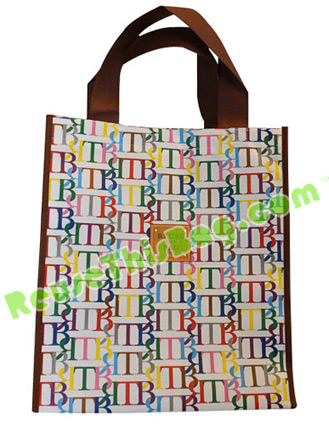
They key to remembering to use reusable bags is to have plenty of them! We were just sent a great bag by ReUseThisBag.com . The bag is very sturdy and washable.

Here’s my system for remembering my bags:
  1. Keep plenty of bags in the car at all times.
  2. If you forget to bring a bag in a store, you either have to go back to the car or simply carry your goods out in the cart or by hand.
  3. When you bring your bags inside the house, put them in the laundry to be washed.
  4. Have a large basket by the door where you keep the clean bags.
  5. When headed to the car, restock your supply.

It really is simple to remember your bags once you get into a routine, and you will look with scorn at all of the single use paper and plastic bags being used by others.  Here are some interesting facts about why you should use reusable bags:
FACT: The largest opposition to the ban of plastic bags comes from the petroleum and plastics industries and of course, consumers that don’t want to change their habits.
FACT: Effective July 1, 2010. Los Angeles County Shoppers can either bring their own bags or pay 25 cents for a paper or biodegradable bag
FACT: Ireland imposed a tax on plastic grocery bags in 2002, San Francisco became the first U.S. city to ban conventional plastic grocery bags, in 2007, and Los Angeles followed suit in 2010
FACT: plastic is the largest source of ocean litter. The second most abundant ocean pollution, is cigarettes.
FACT: Ocean debris worldwide kills at least 1 million sea birds and 100,000 mammals each year, the U.S. National Oceanic and Atmospheric Association has estimated. The litter is most severe in the East Asian seas region, which includes countries such as China with a population 1.3 billion people and where, according to UN figures, almost 60 percent of men smoke.
FACT:  4 trillion to 5 trillion: Number of non-degradable plastic bags used worldwide annually.
FACT:  About 500 billion to 1 trillion plastic bags are used worldwide every year
FACT: Australians were using nearly 7 billion bags a year, and nearly 1.2 billion bags a year were being passed out free in Ireland before government restrictions, according to government estimates.
FACT: Plastic industry trade associations were unable to provide estimates of plastic bag use in the United States. However, based on studies of plastic bag use in other nations, the environmental group Californians Against Waste estimates Americans use 84 billion plastic bags annually.
FACT: The first plastic sandwich bags were introduced in 1957. Department stores started using plastic bags in the late 1970s and supermarket chains introduced the bags in the early 1980s.
FACT: About 100,000 whales, seals, turtles and other marine animals are killed by plastic bags each year worldwide, according to Planet Ark, an international environmental group.
FACT: Last September, more than 354,000 bags — most of them plastic — were collected during an international cleanup of costal areas in the United States and 100 other countries, according to the Ocean Conservancy
Please make an effort to end the single use plastic or paper bag habit!

Disclosure: The products described above were sent to us as free samples. Prior assurances as to the nature of the reviews, whether positive or negative, were not given. No financial payments were accepted in exchange for the reviews. The reviews reflect our honest, authentic opinions.