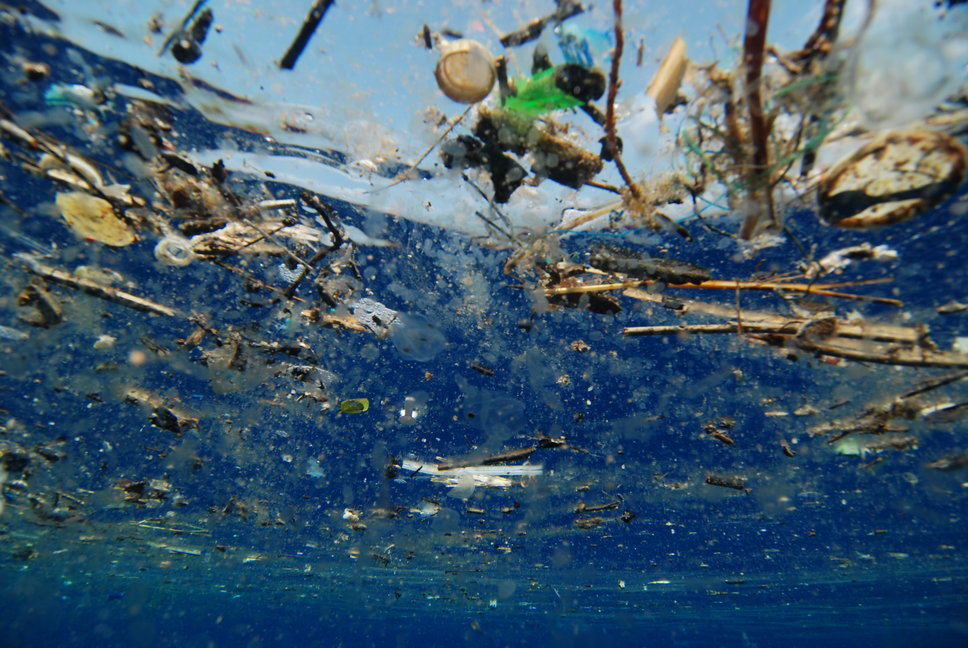
A blog set out to explore, archive & relate plastic pollution happening world-wide, while learning about on-going efforts and solutions to help break free of our addiction to single-use plastics & sharing this awareness with a community of clean water lovers everywhere!
Showing posts with label Plastic Soup in our Oceans. Show all posts

Friday, September 30, 2016

Award-nominated film finds its facts from Brunel

published Sept. 29 by Brunel University in London 

Marine litter
An eye-popping film about plastic pollution featuring environmental science pioneered at Brunel is up for a leading industry award.
A Plastic Ocean is up for best documentary at this week’s Raindance Film Festival. It tells the insidious tale of the millions of tonnes of plastic litter turning the world’s seas into a toxic plastic soup.
In it, Ecotoxicology Professor Susan Jobling, explains the hormone-disrupting effects of chemicals linked to plastic pollution. Professor Jobling, Director of Brunel’s Institute of Environment, Health and Societies appears alongside other leading scientists and Sir David Attenborough.
“It is quite powerful. Shocking even in places,” said researcher Dr Christopher Green, one of the Brunel team of scientific advisors.
A Plastic Ocean is produced by BBC Blue Planet producer, Jo Ruxton and told though the eyes of journalist Craig Leeson and free diver, Tanya Streeter. It shows how plastic marine litter harms wildlife, the environment, and potentially human health. A South Pacific islander tells how the pools she swam and fished as a child are contaminated by plastic waste, saying it has ‘destroyed our paradise’.
Brunel got on board as scientific advisors when the team asked Professor Jobling to talk about endocrine disruption and how chemicals associated with plastic can affect the hormone system. In the early 90s, Professor Jobling was one of the first researchers to show chemicals in plastics can mimic the female sex hormones, oestrogens. In the film, she explains how these chemicals can interfere with reproduction and development and their links to hormone related diseases. “Endocrine disruption in aquatic wildlife was pioneered here at Brunel,” Dr Green explained.
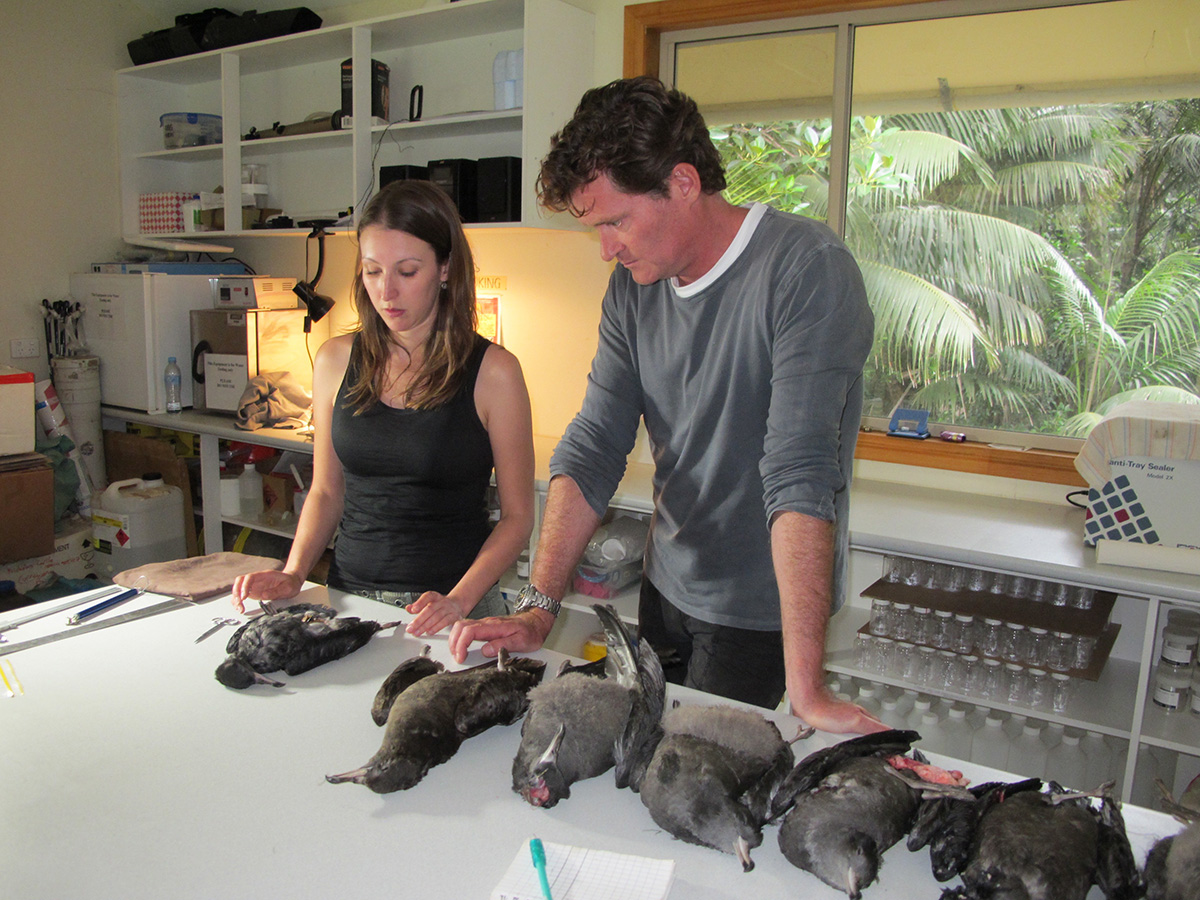
Dead seabirds Image Plastic Oceans Foundation
An alarming statistic is that 90 per cent of seabirds are likely to have swallowed plastic. Without intervention, by 2050, 99% of sea bird species will have consumed plastic.
"I hope it will make people really think about how they use plastics and make them wonder for example if they really need a plastic drinking straw or a single use plastic bottle. I hope it starts to resonate with manufacturers, with industry and government and drives a wave of change towards a more sustainable future. Whatever happens, Brunel will be part of that change, through our innovative multi-disciplinary research."
Professor Jobling, who is researching public attitudes and understanding of plastic pollution with Brunel media sociologist, Lesley Henderson is calling for research into recycling and re-use of plastics. “Only 14% of plastic packaging is collected for recycling,” she said. “We need a new future for plastic."
• The Raindance Film Festival winners will be announced on September 30. Find out about Brunel’s Institute of Environment, Health and Societies here.  Learn more from Plastic Oceans Foundation. Images courtesy of Plastic Oceans Foundation.

Monday, March 24, 2014

Plane search hampered by ocean garbage problem

Published Fri March 21, 2014 By Tom Cohen, CNN

(CNN) -- Another debris field, another new and so-far futile focus in the search for Flight MH370. Two weeks after the Malaysia Airlines jet disappeared, one thing has been made clear: the ocean is full of garbage, literally.

"It isn't like looking for a needle in a haystack," Conservation International senior scientist M. Sanjayan said of the difficulty in finding the Boeing 777 aircraft. "It's like looking for a needle in a needle factory. It is one piece of debris among billions floating in the ocean."

"One piece of debris among billions"
Environmentalists like Sanjayan have warned for years that human abuse of the planet's largest ecosystem causes major problems for ocean life and people that depend on it.

Map of the search area 
Map of the search area


What happens next in Indian Ocean?
With the world's eyes now scouring Asian waters for any trace of the plane that was more than 240 feet long and weighed more than 700,000 pounds, the magnitude of the ocean debris problem has become evident.

Two objects floating in the southern Indian Ocean, including one nearly 80 feet long, initially were called the best lead to date when a satellite detected them last week.

So far, though, search planes have yet to find them or any other plane debris, with speculation mounting that the larger item was a shipping container lost at sea.

No definitive records exist, but estimates for how many containers go overboard range from about 700 to as many as 10,000 of the roughly 100 million that the World Shipping Council says get shipped each year.

Most ocean garbage comes from land
Lost containers are only a minor part of the problem. While ship waste also adds to ocean pollution, most of the garbage comes from land, Sanjayan said.

More than a third of the world's 7 billion people live within 60 miles of an ocean coast, and their waste inevitably reaches the water -- either deliberately or indirectly.

Estimates from various sources, including the Japanese government, indicate that more than 10 million tons of debris -- including houses, tires, trees and appliances -- washed into the sea in the 2011 tsunami.

In addition, discarded plastics -- including countless bags like the kind routinely provided by retail stores and fast food restaurants until a movement in recent years to decrease their use -- form huge, churning garbage fields in the rotating currents of ocean gyres. One in the north Pacific is estimated to be at least 270,000 square miles, or an area larger than Texas.


Photos: The search for Malaysia Airlines Flight 370  
Photos: The search for Malaysia Airlines Flight 370
 

Sanjayan said the plastic breaks down in the saltwater to form a kind of "plastic soup" that gets ingested by marine life. Millions of sea turtles die from the plastic each year, he said, and one in 10 small bait fish has plastic in its stomach.

That happens in the same waters that provide roughly 15% of the animal protein consumed by people.

The world's "toilet"
"The world does use the ocean as its toilet, and then expects that toilet to feed it," Sanjayan noted.
Many island nations and coastal cities lack infrastructure sophisticated enough to deal with all the waste produced, he said. In addition, much of that waste -- such as plastics -- now is so durable that it lasts for decades or longer in any environment.

Sanjayan cited Dhaka, Bangladesh, as an example. Considered the fastest growing city in the world, the capital of 15 million people could expand to more than 20 million people in the next decade, according to the United Nations.

Such growth far exceeds the capacity to deal with the garbage and sewage, Sanjayan said, adding: "All that waste in countries like that -- low-lying, prone to flooding -- periodically flushes into the ocean."


CNN's Jason Hanna contributed to this report.

Monday, April 1, 2013

19-year-old Dutch student develops ocean cleanup technology

Posted By Brett Wilkins published March 27, 2013 in Digital Journal.com
 

Delft - A 19-year-old Dutch engineering student has devised what he claims is a profitable way to remove millions of tons of plastic waste from the oceans.

Boyan Slat, an aerospace engineering student at the Delft University of Technology, started the Ocean Cleanup Foundation to tackle the daunting task of removing the massive plastic garbage patches, called gyres, that blanket enormous spreads of the earth's oceans and threaten the planet's marine ecosystems.

The largest of the garbage patches, the North Pacific Gyre, is believed to be twice the size of the United States. It is believed to contain more than 100 million tons of garbage and continues to grow. The plastic contained within the gyres is made up mostly of small bits and pieces which appear to be food to birds and fish, many of which are found dead with stomachs full of plastic. The plastic bits also contain dangerous chemicals such as PCBs and DDTs that, once consumed, make their way up the food chain to humans.

To clean up these gyres, Slat has come up with a concept he calls the Ocean Cleanup Array, a solar-and sea-powered system of 24 sifters anchored to the ocean floor that use the ocean's own currents to channel plastic pieces into miles of interconnected booms. The booms would also allow marine life to avoid becoming trapped. The collected plastic would then be transported to shore and sold.

Slat claims that the Ocean Cleanup Array will be able to remove 7.25 million tons of plastic from the earth's oceans within five years.

"This concept is so efficient, that we estimate that by selling the plastic received from the five gyres, we would make in fact more money than the plan would cost to execute," Slat writes. "In other words, it's profitable."

Slat's design was awarded Best Technical Design at Delft University, and came in second in the iSea Clash of the Concepts sustainable innovation contest sponsored by the Dutch Ministry of Infrastructure and the Environment. He is currently looking to partner with plankton biologists, engineers and philanthropists to realize his ambitious design.


More about boyan slat, ocean cleanup, ocean cleanup array

Monday, March 25, 2013

Is That Plastic in Your Trash a Hazard?

There are medical, chemical, and environmental issues associated with some pretty common plastic products. Is it time to label these as hazardous waste?

Plastic has taken its lumps of late. Plastic bags are being chased from store checkouts around the world. Bisphenol A, or BPA, in plastic containers has been linked to a Pandora’s box of hormonal and genetic problems. And the Pacific, Atlantic, and Indian oceans each have a gigantic soupy concoction of plastic waste at their centers—the Pacific and Atlantic have one such patch in both the Northern and Southern Hemispheres.

Despite this, the world’s general attitude to plastic has been pretty cavalier. And since we’re not sweating the advent of peak oil as much, at least not in North America, that plastics are made from petrochemicals doesn’t seem so problematic. In fact, if current trends continue, the 280 million tons of plastic produced in 2012 will grow to 33 billion tons in 2050.

How cavalier would we be if plastics, always assumed to be chemically inert, were a hazardous waste?

A group of researchers led by ecologists Chelsea M. Rochman and Mark Anthony Browne, commenting in the journal Nature, call for governments around the world to classify some plastics, such as PVC, polystyrene, polyurethane, and polycarbonate, as hazardous waste. Such a move, if undertaken by major producers like the U.S., China and the European Union, would—in the researchers’ view—foster a virtuous circle of less waste, resulting in less potentially toxic material that ends up in oceans or leaches harmful chemicals from landfills, and could even create new jobs as industry sought safer replacement materials.

Neither Rochman or Browne are anti-plastic. There’s a time and place for the petrochemical-based product, they explained recently over hot drinks at a Starbucks. (The toll? Two throwaway cups, one plastic and unused takeaway lid, and one battered plastic travel mug.) But the present overreliance on plastic, from food containers to fleece clothing to cheap housewares and electronics, is a concern.
Browne points to an increase in plastic milk containers in Britain as a prime example of plastic’s overreach.

For a century milk had been delivered in re-usable glass containers, which were chemically inert, sustainable and fostered local production. To use some jargon, it was a “closed-loop system.” Then plastic swept in. It was cheap and weighed less, making it easier to move longer distances, which tended both to erase the smaller carbon footprint gains from its lightness and allow dairies to be further and further from their customers. Then, of course, once the plastic jug was empty, it either had to be broken down for recycling or just trashed.

In the United States, the EPA estimates 45 percent of plastics were used as containers or for packaging, and just 12 percent of that gets recycled. In New York City, it’s estimated the average citizen tosses out 107 pounds of different kinds of plastic waste each year, and only 17 pounds of that was even designed for recycling, much less was recycled. “We create things just so we can throw them away,” Browne laments.

But while recycling is a positive outcome, declaring some plastics as hazardous waste isn’t an end run, the ecologists say, but a necessary step based on reality. Many plastics can be toxic in themselves in some contexts, or can absorb a surprising array of pollutants.  “Yet,” reads the commentary in Nature, “in the United States, Europe, Australia and Japan, plastics are qualified as solid waste—so are treated the same way as food scraps or glass clippings.”

And, both Browne and Rochman aver, no way is plastic that innocent, even as they admit they’re still trying to get a grip on both the size of the issue and plastic’s ecological impacts.

For example, some plastics that are seen as benign in their consumer forms can have nasty attributes when they break down. Rochman, has studied how different kinds of plastic absorb pollutants in the oceans—she calls plastic-filled seas “cocktails of contaminants.” The kinds of plastic used in detergent bottles and shopping bags, for example, after breaking down into water-borne pellets, can continue to suck up pollutants for months and even years. The Nature piece points to an unpublished analysis that found that at least 71 percent of priority pollutants listed by the EPA and 61 percent listed by European Union are associated with plastic debris.

These poisonous pellets can then bob around in the water or settle and concentrate in the sediment; or they can get eaten by animals or microorganisms and enter the food web.

Rochman’s work shows that not all plastics are equal. Those used in water bottles, or PVC, used in clear-food packaging, aren’t as powerful at absorbing pollutants. On the other hand, vinyl chloride, a component in polyvinyl chloride (PVC), has been identified as carcinogenic.

In fact, while many plastics in their final form are considered safe, many of the chemicals used to make them are  known to be hazardous to health, or conversely, individual chemical compounds may have received a green light for safety but haven’t been tested as they interact with other compounds. Plus, as plastics degrade into smaller pieces, their properties can change. The particles that come from polyester or acrylic clothing—think of that warm fleece jacket made out of recycled two-liter soda bottles—can be ingested or inhaled with malign effects at the cellular level.

Again, says Browne, a lack of research has hampered the ability to make definitive statements, but not, he hopes, from invoking the precautionary principle. He and his co-authors would like producers and packagers to have to show that their products are safe.

“Our goal is to provide information. We’re not telling people what to do but allowing them to make choices. But they should know that plastic is not an inert material.”

While government and industry haven’t necessarily embraced the idea of declaring plastic waste as hazardous, in some cases they’ve supported basic research—one of Rochman’s experiments had funding from the American Chemistry Council—or started phasing out the most likely serious offenders.

There are laws from the local to international level that could help. In the European Union, regulations (described as the most complex sets of rules in the EU’s history) are in place to test out the hazards of chemicals in everyday use, although the effects of these findings aren’t expected to hit industry and consumers for years. And even longstanding rules may not effectively address longstanding problems. For example, the International Convention for the Prevention of Pollution from Ships has banned disposing of plastic at sea since 1988, but since then things like the so-called “Great Pacific Garbage Patch” have gotten worse.

But there are stronger efforts afoot. The Center for Biological Diversity, for example, has petitioned the U.S. Environmental Protection Agency to develop rules, using the Clean Water Act, to reverse the tide of plastic pollution in the oceans.

“We hope to be able to use existing laws—which industry wants us to do—to foster closed-loop systems,” Browne says.  That still leaves the door open to some plastics, especially those that can easily be reused and recycled, and to other materials that are benign by design.

 
About Michael Todd
Most of online editor Michael Todd's career has been spent in newspaper journalism, ranging from papers in the Marshall Islands to tiny California farming communities. Before joining the publishing arm of the Miller-McCune Center, he was managing editor of the national magazine Hispanic Business.

Monday, October 8, 2012

Voyage Reveals 'Planetary Scale' of Plastic in Oceans


A groundbreaking marine voyage by scientific vessel Tara reveals the disturbing state of the world's plastic-filled oceans.
 
Even the Southern Ocean isn't free from the world's plastic trash. (photo: tbdevries via Flickr)

The Tara just completed a 70,000-mile journey over two and a half years, going from the Mediterranean, the Atlantic, the Indian Ocean, the Pacific and the Antarctic with the goal of studying "planktonic and coral ecosystems in the perspective of climate changes," noting that "Studying plankton is like taking the pulse of our planet." The researchers recorded 1.5 million species of marine micro-organisms, more than previously were thought to have existed.

But what the research team also found in the the Southern Ocean and Antarctica was the frightening, planetary reach of plastic in the world's waters.

"We had always assumed that this was a pristine environment, very little touched by human beings," said Chris Bowler, scientific co-ordinator of Tara Oceans, according to the Guardian. "The fact that we found these plastics is a sign that the reach of human beings is truly planetary in scale."

"It's too late to do much about what's already out there at this stage, as this stuff is going to hang around for thousands of years," said Bowler.

Saturday, September 29, 2012

Invisible Plastic Soup is Harming Ocean Animals

Posted by Environmental News Service on September 26, 2012

WAGENINGEN, The Netherlands, September 26, 2012 (ENS) – Plastic nanoparticles released when plastic debris decomposes in seawater can have an adverse effect on sea animals, Dutch scientists have found. 

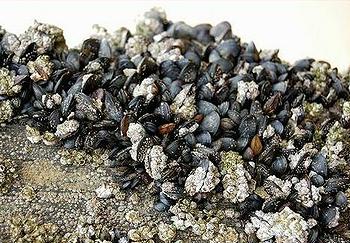
Nanoparticles of plastic measuring just thirty millionths of a millimeter, invisible to the naked eye, are responsible for inhibiting feeding and growth in mussels, according to new research by Professor Bart Koelmans of Wageningen University and his research team.

They published a report of their investigations in the most recent issue of the journal “Environmental Toxicology and Chemistry.”

“The presence of plastic soup in the oceans is regarded as a big problem,” says Koelmans, a professor of water and sediment quality who is associated with IMARES, the Institute for Marine Resources and Ecosystem Studies, at Wageningen University.
mussels
Mussels on Dutch shore ( (Photo by Paul Boag)

The plastic soup is formed when plastic debris decomposes in seawater. “Such particles are probably also released from cosmetics and from clothes in the wash, subsequently entering the sewage system and surface waters and eventually reaching the sea,” Koelmans explains.

Koelmans and his team exposed mussels to various concentrations of nanoplastic in order to discover the concentration at which an effect was noticeable. 

They found that the exposed mussels eat less of their normal food, algae, than mussels that have not been exposed to plastic nanoparticles, and they grow less well.

By giving the plastic nanoparticles color, and by measuring them using dynamic light scattering, it was possible to determine the particle concentration that exerted an effect on the test mussels. 

The researchers write that the extent to which the tiny plastic particles clump together is extremely important for understanding particle uptake and the resulting effects in marine organisms. 

“It means that those effects are not easy to predict because the biological availability of the particles can differ enormously from one organism to another, and because variation in water quality also plays a role,” says Koelmans.

Very little is known about the effects plastic nanoparticles have on sea life. The effects revealed by this study do not yet prove that plastic in the North Sea is a big problem, but they do suggest that further research is extremely important, Koelmans said.

This study is the first of four by Wageningen University and IMARES that will investigate the effects of plastic in the North Sea. 

The next will focus on the effect of plastic on lugworms, which lose weight due to uptake of plastic particles. The scientists have already found that as a result of their exposure to nanoplastics the worms take in more toxic substances such as polychlorinated biphenyls (PCBs), which bind to plastics, than worms that have not been exposed.

Koelmans sees the need for research into other toxic substances that bind to plastic in seawater. 

In order to analyse the interaction of plastic and other toxic substances in the food web, Koelmans’ group has created a detailed computer model to estimate the risks posed by plastics in the sea. 

The final study in this series investigates the effects of plastic debris in the stomachs of fish. The analysis of hundreds of fish shows that 12 percent of them have debris in their stomachs and roughly half of that debris is plastic.

Koelmans says the European Union and the Dutch government recognize the problem and the need to monitor the existence of plastics in the seas in order to learn more about present and future concentrations of plastic micro-particles and nanoparticles in marine environments. 


Environment News Service (http://s.tt/1oqgg)

Wednesday, May 23, 2012

Plastic Oceans (Plastic in our playground!) Part 1 - Plastic bags

posted in www.sail-world.com by Ian Thomson on May 20, 2012


'Plastic in the sea'   

The ocean is our playground. We sail on it, we swim in it, we fish from it and without it we don't have 60-80% of the world's oxygen........So why do we abuse it?

The reason we abuse it is because most of us don't even realise we are. Covering 70% of the planet, our oceans seem to cope with everything we throw at it, right? Well think again.

So let's go back to the beginning. When we were kids at school we were all taught to clean up all the trash in our playground. So why did we change as we grew older. For many of us sailors, the ocean is our new playground, yet we throw our trash in it all the time, not directly, but we certainly contribute.

Let's pick two items that are incredibly numerous in our oceans and cause great issues for creatures living in the ocean and the ocean itself, let alone creating health risks to us.

Plastic bags and plastic water bottles What do these items have in common? They have both been created for 'Convenience'.

IMG 2244 - Ocean Crusaders -  Ian Thomson  
This is where it all began for Ocean Crusaders. As a professional skipper in the Whitsundays I began pulling Dead Sea turtles out of the water so they could be inspected by marine parks. The key moment came when one of the turtles I pulled out was found to have a plastic bag formed perfectly in its stomach. It had died of starvation but not before trying to eat 12 cigarette butts, a plastic water bottle cap and 1/2 a coke can. I set out to educate people of the issue and this is my crusade.

Our world uses somewhere between 500 billion and one trillion plastic bags every single year. They are big numbers but let's put those numbers into perspective. We see these numbers and we go, O.K that's big but have you ever tried to count to one million, let alone one billion or one trillion. To count straight through from one to 1,000,000 will take you 11 days. Yep, that's right 11 days. Try 32 years to count to one billion. You cannot count to one trillion in your lifetime.

Or let's put it another way, grains of rice. To get one million grains of rice you need 25 litres (6.5 gallons) of rice. So multiply that by 1,000 to get one billion. So you need 25,000 litres of rice (6,500 gallons).

So let's look at those numbers again. We use somewhere between 500 billion and one trillion plastic bags every year. Based on 500 billion, if we joined them end on end they would circumnavigate the world a whopping 3.1 million times. Imagine laying them out flat, we could wrap our world hundreds of thousands of times.

So now you understand the scale of the issue, let's go a step further. This is just plastic shopping bags. Add to this figure the plastic used to wrap bread, toilet paper and what about the plastic that pretty much every item in the world is packaged in. It is a massive number that the plastic manufacturers love but our environment hates.

Plastics are like diamonds.........they last forever!!!!!

plastic water bottles - Ocean Crusaders -  Ian Thomson  
This is my favorite saying as it is so true. Plastic will never go away. It does not break down, it breaks up.....into millions of smaller pieces that break up further through a process called photo degradation. In samples taken from the North Pacific Garbage Patch 10 years ago it was shown that pieces of plastic the size of plankton were floating around imitating this micro-organism.

In fact there was a ratio of six pieces of plastic to every plankton. Studies last year showed an increase to 45:1 and this is before the garbage from the Japanese Tsunami in March 2011 makes it to this region, believed to be another 1.5 million tonnes of trash floating around the north pacific.

The standard single use plastic bag will be around for over 1,000 years before it begins to photo-degrade. So with 500 billion of them added to our world every year, we are creating a problem we cannot clean up. That's probably why there is enough rubbish in the North Pacific to cover the entire country of Australia 3m (10ft) deep. 50% of plastic bags that make it to the ocean come from landfill so putting them in the bin is not a solution.

When you add to these statistics the fact that 100,000+ marine creatures and one million sea birds die because of plastic suffocation or entanglement every year, it is time for all of us to change our habits and as ocean users, we should be leading the way.

6010 108830235765 102067230765 2636790 268210 n - Ocean Crusaders -  Ian Thomson  

You all know the alternatives for shopping bags. It's only because we are lazy that we don't use them as often as we should. Just remember to put them back in your car when you've unpacked the shopping so they are there when you want them next. If you do need to use plastic bags for rubbish bins etc. use compostable bags that by law have to decompose within a short period of time, usually six months maximum pending your country.

If we don't make changes now, we'll be sailing on oceans of plastic before we know it, clogging our engine intakes and contaminating the fish we all love to eat, or worse, slowing us down when we race.

Say no to plastic bags.

Reduce, Reuse, Recycle.

Ocean Crusaders was founded by Ian Thomson in June 2010 after setting the world record for the fastest solo circumnavigation of Australia. He is on a crusade to educate the world of the issues our oceans are facing. An online education program is available for primary school teachers to present to their students or for parents to present to their children. Visit www.OceanCrusaders.org for more details.

Sailors should sign their yacht up to the 'Ocean Safe Certification' program to show their support for the campaign here and don't forget to like us on our Facebook page.

Part 2 in the series focuses on Plastic Water Bottles.
by Ian Thomson

Sunday, April 15, 2012

Charles Moore TED Talk

If you have just 7 minutes, please watch this sobering video from Marine Researcher, Charles Moore.


Biography of Captain Charles Moore from www.algalita.org:

AMRF Founder and Research Coordinator
Captain Charles Moore
A third generation resident of Long Beach, California, Captain Charles Moore grew up in and on the Pacific Ocean. His father was an industrial chemist and avid sailor who took young Charles and his siblings sailing to remote destinations from Guadalupe Island to Hawaii. Charles attended the University of California at San Diego where he studied chemistry and Spanish.

After 25 years running a woodworking and finishing business, Charles founded Algalita Marine Research Foundation in 1994. In 1995 he launched his purpose-designed, aluminum-hulled research vessel, Alguita, in Hobart, Tasmania, and helped organize the Australian Government's first "Coastcare" research voyage to document anthropogenic (human-caused) contamination of Australia's east coast. Upon his return to California, he became a coordinator of the State Water Resources Control Board's Volunteer Water Monitoring Steering Committee and developed chemical and bacterial monitoring methods for the Surfrider Foundation's "Blue Water Task Force." As a member of the Southern California Coastal Water Research Project's Bight '98 steering committee, he realized the need for and provided a research vessel so that Mexican researchers from Baja California could participate for the first time in assessing the entire Southern California Bight along the coastline from Point Conception to San Diego.

Oceanographic Research Vessel Alguita and its Captain found their true calling after a 1997 yacht race to Hawaii. On his return voyage, Captain Moore veered from the usual sea route and saw an ocean he had never known. "Every time I came on deck to survey the horizon, I saw a soap bottle, bottle cap or a shard of plastic waste bobbing by. Here I was in the middle of the ocean and there was nowhere I could go to avoid the plastic." Ever since, Captain Moore has dedicated his time and resources to understanding and remediating the ocean's plastic load. Along with collaborators from the Southern California Coastal Water Research Project he developed protocols for monitoring marine and beach micro-plastics which are now used worldwide.

He is the lead author of two scientific papers published in Marine Pollution Bulletin:
  • "A Comparison of Plastic and Plankton in the North Pacific Central Gyre". Article by C.J. Moore, S.L. Moore, M.K. Leecaster, and S.B. Weisberg, Algalita Marine Research Foundation and Southern California Coastal Water Research Project. Published in Marine Pollution Bulletin 42 (2001) 1297–1300.
  • "A Comparison of Neustonic Plastic and Zooplankton Abundance in Southern California’s Coastal Waters". Article by C.J. Moore, S.L. Moore, S.B. Weisberg, G.L. Lattin, and A.F. Zellers; Algalita Marine Research Foundation and Southern California Coastal Water Research Project. Published in Marine Pollution Bulletin 44 (2002) 1035–1038.

The first paper documented his 1999 study, which shocked the scientific world when it found 6 times more plastic fragments by weight in the central Pacific than the associated zooplankton. His second paper found that plastic outweighs plankton by a factor of 2.5 in the near coastal surface waters of Southern California.

He also is the sole author of a review article in the October 2008 issue of Environmental Research, “Synthetic polymers in the marine environment: A rapidly increasing, long term threat,” and along with Richard Thompson, Fred vom Saal, and Shanna Swan, edited the July 27, 2009 Theme issue of the Philosophical Transactions of the Royal Society B titled “Plastics, the environment and human health.”

To date, Captain Moore has conducted ocean and coastal sampling for plastic fragments through more than 40,000 miles of the North Pacific Ocean, across 22 degrees of latitude and 70 degrees of longitude. His latest 10,000 mile voyage took him and his crew two-thirds of the way to Japan across the International Dateline. Captain Moore's work has been highlighted in numerous major media outlets, including ABC’s Nightline, Good Morning America, National Public Radio, Rolling Stone, and The Wall Street Journal.
February 2010

Monday, April 9, 2012

New Waterways and Ocean Trash Data

New Data Shows What Trash is in Your Ocean and Waterways

New data released by the Ocean Conservancy highlights the need for humans to clean up their acts. The numbers, generated during the 2011 International Coastal Cleanup last September, are staggering.

With 598,076 volunteers around the world who picked up 9,184,428 pounds of trash from 20,776 miles of shorelines, rivers and lakes, it’s not surprising what is the most prolific item found – cigarette butts. If you are wondering how Ocean Conservancy knows down to the last one, how many butts there were, each volunteer is issued an inventory control sheet to keep tabs.

By now you are probably feeling a little ill, seeing just how much junk is floating around and landing on the world’s shores. But what about the damage being done to our wildlife? We know better — they don’t.

Stop Trash at the Source – You

“Our top 10 list consistently shows that what you use, eat and drink in our everyday life ends up in the ocean,” Vikki Spruill, President and CEO of Ocean Conservancy said. “We need to stop trash at its source, and the biggest impact we can have involves the choices each of us make every day. You can make a big difference for our ocean by taking personal responsibility for your own trash, and that can start with small changes, such as properly disposing of trash and choosing reusable bags, bottles and picnic supplies.”

More Facts and Figures from Ocean Conservancy

Over the past 26 years, more than nine million (9,361,453) volunteers have removed one hundred and fifty-three million (153,790,918) pounds of trash from more than three hundred and twelve thousand (312,290) miles of coastline and waterways in 153 countries and locations.

Volunteers found:

  • Enough clothing (266,997 items) to outfit every expected audience member of the London 2012 Summer Olympics Opening Ceremony.
  • Enough food packaging (940,277 pieces) to get takeout for breakfast, lunch and dinner every day for the next 858 years.
  • Enough light bulbs (24,384 bulbs) to replace every light on the Eiffel Tower.
  • Enough beverage cans and glass beverage containers that, if recycled, would net $45,489.15.
  • Enough balloons (93,913) to provide one to every person expected to attend the 2012 NCAA Men’s Basketball National Championship.
  • Enough cups, plates, forks, knives and spoons (707,171) to host a barbeque for every student enrolled at Ohio State University, University of Louisville, University of Kentucky, and University of Kansas, to celebrate their teams’ appearance in the 2012 NCAA Men’s Basketball Final Four.
  • In the past 26 years of cleanups, volunteers found:
  • Fifty-five million cigarettes butts, which if stacked vertically, would be as tall as 3,613 Empire State Buildings.
  • Enough glass and plastic bottles to provide every resident of New York City, Los Angeles, Chicago, Houston, and Philadelphia a cold beverage on a hot summer day.
  • Enough appliances (125,156) to fill 37,434 single-axle dump trucks.
  • More than 870 thousand (870,935) diapers – enough to put one on every child born in the UK last year.
  • Enough cups, plates, forks, knives and spoons to host a picnic for 2.15 million people.
You can make a difference by choosing to avoid single-use plastic items like water bottles and picnic utensils that end up as ocean trash. If you have to smoke, don’t toss the butts, dispose of them properly in a bin, or better yet, quit!


Partners:

The Coca-Cola Company has supported Ocean Conservancy’s International Coastal Cleanup for the past 17 years. Other national sponsors include National Oceanic and Atmospheric Administration, Altria Group, Inc., The Dow Chemical Company, Landshark Lager, Glad, The Walt Disney Company, Brunswick Public Foundation, Teva and U.S. Environmental Protection Agency.

Ocean Conservancy is the world’s foremost advocate for the oceans. Through science-based advocacy, research, and public education, it informs, inspires and empowers people to speak and act for the oceans.

Friday, January 6, 2012

Our Oceans: A Plastic Soup

by Renee Cho | 1.26.2011 posted in Earth's Institute at Columbia University

Photo credit: cesarharada.com

“Humanity’s plastic footprint is probably more dangerous than its carbon footprint,” said Captain Charles Moore, who, in 1997, discovered the Great Pacific Garbage Patch.  Its name is misleading because the huge expanse of floating marine debris is actually more like a soup of confetti-sized plastic bits, produced by the runoff of our throwaway lifestyle that has made its way into our oceans.

The Great Pacific Garbage Patch, the most notorious stretch of plastic debris, is located northeast of Hawaii, about 1000 miles from Hawaii and California. It’s an enormous and immeasurable area of marine debris, trapped by one of the five major subtropical gyres (systems of ocean currents) that corrals and carries marine garbage into its vortex. 5 Gyres, an organization that partners with Moore’s Algalita Marine Research Foundation to study plastic pollution in the ocean, has sent expeditions across the North Pacific Gyre, the North and South Atlantic Gyres, and the Indian Ocean Gyre, and found plastic in every one of them, though concentrations vary.  Some reports have estimated the Great Pacific Garbage Patch to be twice the size of the continental United States, but no one can accurately measure the boundaries of the trash gyres because they are vast, remote and always shifting with ocean conditions. In any case, plastic marine debris is now found on the surface of every ocean on Earth.
Ocean gyres. Photo credit: NOAA

Some plastic and marine debris comes from fishing gear, offshore oil and gas platforms, and ships.  But 80 percent of it comes from the land—litter that gets stuck in storm drains and is washed into rivers and out to sea, the legal and illegal dumping of garbage and appliances, and plastic resin pellets inadvertently spilled and unloaded by plastic manufacturers. Trash Travels, Ocean Conservancy’s 2010 report, states that 60 percent of all marine debris in 2009 consisted of “disposable” items, with the most common being cigarettes, plastic bags, food containers, bottle caps and plastic bottles. And no matter where the litter originates, once it reaches the ocean, it becomes a planetary problem as garbage travels thousands of miles carried by the gyres.

The lightness and durability that make plastic such a useful and versatile material for manufacturers also make it a long-term problem for the environment. Trash Travels estimates that plastic bags can take 20 years to decompose, plastic bottles up to 450 years, and fishing line, 600 years; but in fact, no one really knows how long plastics will remain in the ocean. With exposure to UV rays and the ocean environment, plastic breaks down into smaller and smaller fragments. The majority of the plastic found in the ocean are tiny pieces less than 1 cm. in size, with the mass of 1/10 of a paper clip.
Photo credit: Chris Jordan

The Sea Education Association’s (SEA) expedition to the western North Atlantic Ocean found bits of HDPE (high density polyethylene), LDPE (low density polyethylene), and PP (polypropylene) from items such as milk containers, plastic bags, and straws, which float on the surface because they are less dense than seawater. It did not find PET (polyethylene terephthalate), PVC (polyvinyl chloride), and PS (polystyrene solid), which sink because they are denser than seawater. Algalita, which sampled down to depths of 100 hundred meters throughout the eastern side of the North Pacific Gyre, found LDPE, styrene, PP and PET.

Last year, SEA released the results of its 22-year study of plastic pollution in the western North Atlantic and Caribbean Sea. The greatest amount of plastic was found in the North Atlantic Gyre, which contains the Sargasso Sea. The most plastic collected during a 30-minute tow was 1069 pieces, which, if scaled up, would be equal to about 580,000 pieces per square kilometer. The average concentration of samples would roughly equal 20,300 pieces per square kilometer. While discarded plastic in the U.S. quadrupled between 1980 and 2008, however, the concentration of debris in the Atlantic did not appear to increase. Where has it all gone? Lead scientist Kara Lavender Law speculated that some is being eaten by marine animals, some has broken down into bits too small to be captured by tow nets, some gets washed up onto beaches, and some is sinking to the ocean floor. According to Project Kaisei, a non-profit also studying marine debris, 70 percent of the man-made waste that enters the ocean sinks to the bottom. That means that the plastic soup is only the 30 percent of the debris that floats. No one knows what lies deep down because so far, there have been no studies of the plastic on the ocean floor.

But we know the plastic debris on the surface of the ocean is taking its toll on marine life. Animals get strangled in fishing lines, nets, and plastic litter. Fish and seabirds ingest bits of plastic they mistake for food that can block their intestinal tracts and kill them, or make them feel full so that they do not eat real food.One of Moore’s expeditions collected hundreds of samples of fish, and conducted necropsies on them: over 1/3 had ingested polluted plastic fragments, including one 2.5 inch fish that had 84 pieces of plastic in its tiny gut. In 1999, Moore’s research in the Central Pacific found six times more plastic than zooplankton in the water. In 2002, off the coast of Southern California, he discovered the ratio of plastic to plankton was 2.5. Preliminary results on samples Algalita took in 2008 already show that there is a significant increase in the ratio of plastic to plankton in the water. Plastic bits also create habitats for microorganisms and other species, allowing would-be invasive species to hitch rides to new areas of the ocean.

A recent study found that plastics take up and accumulate persistent organic pollutants (POPs) such as carcinogenic and endocrine-disrupting polychlorinated biphenyls (PCBs), polycyclic aromatic hydrocarbons (PAHs), and organochlorine pesticides such as DDD, a derivative of DDT. Over 50 percent of the plastic samples studied contained PCBs, and over 75 percent contained PAHs. According to Moore, plastic debris can attract and concentrate POPs up to a million times their levels in the surrounding seawater, and when consumed by marine animals, the POPs endanger both the creatures that ingest them and humans higher up on the food chain, especially infants. Moore has said, “No fish monger on Earth can sell you a certified organic wild-caught fish.”

Despite all these environmental and potential human health impacts, most scientists agree that it is not feasible to clean up the plastic soup in our oceans. The areas are huge, and the debris is unevenly distributed and always shifting. A cleanup would entail filtering enormous amounts of water, and the by-catch of plankton and other marine organisms would be harmful to ocean ecosystems. Moreover, the fact that the trash gyres are in the open ocean, in international waters, makes it difficult to get governments to invest in research or cleanup efforts.

Undaunted, Project Kaisei, on its two expeditions to the North Pacific Gyre, has been working to develop and test new methods for removal of some of the plastic waste. Its goal is to learn more about how to efficiently remove the floating plastic, and to use new techniques to recycle the material into fuel or other products. Project Kaisei plans to test new, and scaled-up catch methods on future expeditions, as well as passive netting and catch methods that require little fuel and have low impacts on marine life.

Moore and Algalita believe that the best way to deal with the plastic debris is to stop the waste from entering the ocean in the first place: to replace, reduce, reuse and recycle our plastics. Marcus Eriksen, one of the founders of 5 Gyres, also promotes beach cleanup because “What we now know is that if we stop adding more plastic to the ocean, in time the gyres will kick out the plastic pollution they currently hold.  If you want to clean the gyre, clean your beach.”  In 2010, approximately 500,000 volunteers did just that, taking part in the 25th Annual International Coastal Cleanup and removing millions of pounds of marine debris from 6,000 sites around the world, including all 50 U.S. states.
Photo credit: Ocean Conservancy

The Algalita Marine Research Foundation has launched a three-year scientific study expedition to the Antarctic Ocean, and is planning a voyage to the North Pacific gyre in July. This spring, 5 Gyres is preparing to sail across the South Pacific Gyre from Chile to Easter Island. Findings from these expeditions and others will be shared at the 5th International Marine Debris Conference in March, 2011.

Columbia Water Center demonstrates research-based solutions to global freshwater scarcity.  Follow Columbia Water Center on Facebook and Twitter