A blog set out to explore, archive & relate plastic pollution happening world-wide, while learning about on-going efforts and solutions to help break free of our addiction to single-use plastics & sharing this awareness with a community of clean water lovers everywhere!
Showing posts with label Ocean Gyre Research. Show all posts

Friday, May 5, 2017

This is how hundreds of tons of plastic trash end up in Arctic Ocean

Published in the LA Times by  Sean Greene Contact Reporter Environmental Science, May 2, 2017

Plastic fragments
A photo collage shows plastic fragments found in the Arctic Ocean. While plastic debris was scarce in most of the Arctic waters, it reached high concentrations in areas of the Greenland and Barents seas. (Andres Cozar)

Plastic trash is now so ubiquitous that researchers have found hundreds of tons of it floating in the Arctic Ocean.

It may not sound like much, but it’s a surprising amount given the area’s sparse population. The researchers who measured the plastic debris in the waters near the north pole described it as “widespread and abundant,” according to a study last month in the journal in Science Advances.

“We already knew that the marine plastic pollution was high at tropical and temperate latitudes,” said study leader Andrés Cózar, an ecologist at the University of Cadiz in Spain. “Now, we also know that the plastic waste is extending up to the poles.”

Cózar and his colleagues estimated that 63% of the ice-free Arctic Ocean is “slightly polluted” with various types of plastic debris, including fishing line, microbeads and fragments of plastic products. Of the plastic trash that makes it to the Arctic, 95% of the plastic “dead ends” in either the Greenland Sea or the Barents Sea, north of Scandinavia.

Although the world’s other ocean “garbage patches” are significantly larger than the plastic accumulation in the Arctic, the average concentrations of plastic found there were comparable to those found in the Pacific, Atlantic and Indian oceans.

In a 2014 study, Cózar and his team estimated those oceans contain 10,000 to 35,000 tons of plastic pollution, which almost never fully decomposes on its own. Their latest findings suggest 3% of that global total is floating in the Arctic.

The researchers estimate hundreds of thousands of tiny plastic pieces are floating on the surface of the Arctic Ocean

In 2013, researchers aboard the Tara Oceans expedition who were working with Cózar sampled 42 sites of ice-free ocean around the Arctic Circle. Using mesh nets, they skimmed for bits of plastic floating on the surface and for debris suspended in the ocean depths.

Scientists lower nets into the water to collect plankton and microplastics.
Scientists lower nets into the water to collect plankton and microplastics. (Anna Deniaud / Tara Expeditions Foundation)
In their analysis, the researchers estimated that between 100 and 1,200 tons of plastic is floating in the Arctic Ocean — a wide range to be sure, but one that could be narrowed with future study.

The vast majority of the debris was plastic fragments, including buoyant pieces of foam and manufactured items made from polyethylene and polypropylene. (The researchers estimated that 300 billion plastic items would weigh about 400 tons.)

The researchers also found fishing line and plastic microbeads, tiny granules that are added to toothpastes, facial scrubs and cosmetics. Microbeads are too small for the filters used in wastewater treatment plants, so when they’re washed down the drain they wind up in rivers, lakes and oceans, Cózar said.

The research team also found very few remains of plastic bags and wrappers. These types of plastic may be quicker to sink because their larger surface areas attract organism growth, which weighs the material down.

Over time, the sun causes plastic that’s floating on the ocean surface to degrade into tiny pieces called microplastics. The debris found in the Arctic was especially small, suggesting it traveled a long way to get there.

The different categories of microplastics found in the Arctic Ocean.
The different categories of microplastics found in the Arctic Ocean. (Andres Cózar)
'Extraordinary levels' of pollution have contaminated even the deepest parts of the Pacific Ocean »

Currents in the Atlantic act as a ‘conveyor belt’ for floating bits of plastic

Due to the small size of the debris and the region’s low population, the researchers involved in the new study suspected that much of the Arctic’s plastic pollution must be coming from distant sources.

To test this, they retraced the debris’ possible path to the Arctic using data from 17,000 satellite buoys spread across the world’s oceans. The data revealed that floating plastic gets caught up in the North Atlantic in a stretch of a deep-ocean current called the thermohaline circulation.

The thermohaline acts as a global conveyor belt powered by the temperature and salinity differences between the warm waters near the equator and the icy Arctic Ocean.

Locations and plastic concentrations of the sites sampled. The white area shows the extension of the polar ice cap in August 2013, and green curves represent the North Atlantic Subtropical Ocean Gyres and the Global Thermohaline Circulation poleward branch.
Locations and plastic concentrations of the sites sampled. The white area shows the extension of the polar ice cap in August 2013, and green curves represent the North Atlantic Subtropical Ocean Gyres and the Global Thermohaline Circulation poleward branch. (Andres Cózar)

Ocean currents carry warm surface water into the Arctic via a “gateway” between Iceland and Scotland. When ice forms in the northern seas, the water that remains becomes saltier. This denser seawater sinks and flows back south, into the ocean basins near the equator.

As plastic pollution from the East Coast of the United States, northwestern Europe and the United Kingdom converges into a central ocean gyre in the Atlantic, the garbage accumulates on the surface and gets swept up in this slow-moving conveyor belt. It’s also possible, the study authors note, that busy shipping lanes between North America and Europe contribute some amount of plastic debris.

The floating plastic’s ports of call? The Greenland Sea and Barents Sea, which the authors called “a dead end for this plastic conveyor belt.”

In these areas, rising temperatures have reduced summer sea ice levels and created a layer of freshwater that seems to stop the advance of the plastic debris. However, it’s possible — depending on the density of the plastic items — that some of the debris could be forced toward the bottom of the ocean, Cózar said.

Since the “accumulation zones” in the Greenland and Barents seas are fed by drifting debris from lower latitudes, the amount of plastic pollution in the Arctic is likely to keep growing — even if Europe and North America managed to stop depositing trash in the ocean altogether. This will be especially noticeable on the seafloor, which Cózar called “the final destination” of marine plastic.

What this means for the Arctic

The accumulation of plastic in the ocean — especially in the Arctic — is a worrying sign, Cózar said.

“The range of marine plastic size is so wide that any organism, from plankton to whales, could ingest plastic debris,” Cózar said.

Many seabirds, for example, mistake decaying plastic for food. Animals that partake in a plastic-heavy diet could suffocate, or starve to death because they miss out on crucial nutrients.

Plankton and microplastics.
Plankton and microplastics. (Anna Deniaud / Tara Expeditions Foundation)

On Norway’s Svalbard Islands, gull-like birds called northern fulmars feed by snatching prey from the water’s surface. Most of the fulmars sampled were found to have eaten an average 15 pieces of plastic per animal — a level that far exceeds the ecological goals set for the region.

In the Pacific Ocean, scientists found evidence of plastic accumulating in Antarctic fur seals that ate contaminated fish.

As climate change warms the Arctic and melts sea ice into open ocean, the conveyor belt of plastic will likely continue even further north.

“We have been using plastic for only a few decades, but the problem has reached a global scale in such a limited time frame,” Cózar said. “The production and consumption of plastic will likely continue to rise ... so this will become a global chronic problem without urgent actions to achieve a sustainable use of the plastic materials.”
A seal lies on an iceberg in front of the research vessel Tara.
A seal lies on an iceberg in front of the research vessel Tara. (Anna Deniaud / Tara Expeditions Foundation)

Ocean plastic. Billionaire Kjell Inge Rokke donates high-tech vessel to the scientific community

Published in LifeGate 03 MAY 2017 by  ANDREA BAROLINI

The research vessel will be launched in 2020 and will be equipped with state-of-the-art technologies to control ocean plastic pollution. The project is in collaboration with WWF.

Norwegian billionaire Kjell Inge Rokke announced on 2 May that he will fund the construction of a high-tech research vessel. The ship will be donated to the scientific community with the aim of detecting and monitoring the presence of plastic in oceans.

“I want to give something back to society”

Rokke is considered Norway’s second richest man, with 2 billion dollars of assets. “I want to give the lion’s share of what I have earned back to society. This ship is part of that,” he told daily newspaper Aftenposten. This move marks a turning point in his life. Indeed, Rokke made his fortune thanks to the fishing industry and, most of all, hydrocarbons.

nave norvegia plastica
The vessel that will be donated to the scientific community to control plastic pollution at sea ©Rosellinis four-10/Wwf Norway

The 181-metre-long vessel will host a crew of 30 people and a 60-strong research team. It will be built in collaboration with WWF and is scheduled to be launched in 2020. Thanks to state-of-the-art technologies aboard, the vessel will make researches on ocean microplastics easier. “This vessel will be able to take marine research to a completely new level. Finding solutions has never been more urgent,” said Nina Jensen, the head of WWF Norway.

Ocean plastic in the Arctic

The issue of plastic pollution in oceans, which is increasingly affecting marine life and ecosystems, has got back in the spotlight after the release of a study published in the journal Sciences Advances. The research confirms the presence of plastic debris in the Arctic Ocean and defines the area a dead-end for floating plastic.

Also, the study highlights how the presence of plastic in the Atlantic, Pacific, and Indian oceans was previously assessed by detailed researches, but it has been confirmed off Greenland, North Cape and in the Barents Sea only now. In the Arctic there are smaller amounts of plastic debris than, say, in the Mediterranean Sea, but that doesn’t mean are less worrying.

rifiuti plastica mare

Plastic waste on a beach in Prestwick, Scotland © Christopher Furlong/Getty Images
Scientists suggest that the Arctic could be home to up to 1,200 tonnes of plastic debris. They still don’t know the impact plastic has on sea beds as they managed to assess only floating plastic, but they claim many debris have sunken or have been trapped in the ice cap.

Featured image: Norwagian billionaire Kjell Inge Rokke with Head of WWF Norway Nina Jensen ©Ilja C. Hendel/WWF Norway

Tuesday, February 23, 2016

More Plastic Than Fish in the Ocean by 2050

Published by Cole Mellino, January 20, 2016 in EcoWatch.com

There will be more plastic than fish in the ocean by 2050, warned the Ellen MacArthur Foundation in a report published Tuesday. The report, The New Plastics Economy: Rethinking the Future of Plastics, was produced by the foundation and the World Economic Forum with analytical support from McKinsey & Company.

There will be more plastic than fish in the ocean by 2050, according to a new report from the Ellen MacArthur Foundation. Photo credit: Plastic Pollution

Every year “at least 8 million tons of plastics leak into the ocean—which is equivalent to dumping the contents of one garbage truck into the ocean every minute,” the report finds. “If no action is taken, this is expected to increase to two per minute by 2030 and four per minute by 2050.

“In a business-as-usual scenario, the ocean is expected to contain one ton of plastic for every three tons of fish by 2025, and by 2050, more plastics than fish (by weight).”

Plastic production has increased 20-fold since 1964, reaching 311 million tons in 2014, the report says. It is expected to double again in the next 20 years and almost quadruple by 2050. New plastics will consume 20 percent of all oil production within 35 years, up from an estimated 5 percent today.

Plastic production has increased dramatically in the last 50 years. Photo credit: Ellen MacArthur Foundation

The vast majority of plastics is not effectively recycled, either, according to the report. Only 5 percent is properly recycled, while 40 percent is sent to a landfill and a third ends up in the environment, including in the world’s oceans. Much of the rest is burned, which generates energy, The Guardian noted, but also causes “more fossil fuels to be consumed in order to make new plastic bags, cups, tubs and consumer devices demanded by the economy.”

The report provides a first-ever “vision of a global economy in which plastics never become waste, and outlines concrete steps towards achieving the systemic shift needed,” the Ellen MacArthur Foundation said.

Our current economic model is largely linear. Photo credit: Ellen MacArthur Foundation

This vision is built on applying “circular economy principles” to global plastic packaging flows, which could “transform the plastics economy and drastically reduce negative externalities such as leakage into oceans,” the foundation explained. The report calls for a transition away from “today’s linear ‘take, make, dispose’ economic model” and towards an economy that is “restorative and regenerative by design” and which altogether eliminates the concept of waste (just as there is no concept of waste in natural systems).

The report concludes that the plastics industry is not doing nearly enough to address plastic pollution.

“Plastics are the workhorse material of the modern economy, with unbeaten properties,” Dr. Martin Stuchtey of the McKinsey Center for Business and Environment, who helped produce the report, said. “However they are also the ultimate single-use material. Growing volumes of end-of-use plastics are generating costs and destroying value to the industry. After-use plastics could, with circular economy thinking, be turned into valuable feedstock.”

The report calls for a transition to a circular economy. Photo credit: Ellen MacArthur Foundation

The report calls for smarter packaging, such as phasing out hard-to-recycle plastics like polyvinyl chloride and expandable polystyrene, redesigning plastic items so they can be reused better, rethinking their production methods to make recycling easier and developing compostable packing on a larger scale.

Tuesday, December 1, 2015

Boyan Slat One Step Closer to Launching World’s Largest Ocean Plastic Cleanup

Published in EcoWatch Nov. 13, 2015 by Lorraine Chow

Boyan Slat’s plan to rid the world’s oceans of plastic with his revolutionary ocean-cleaning system is set for real-life trials next year after last week’s successful tests in the Netherlands of a scaled-down prototype at Maritime Research Institute Netherlands (MARIN), the Guardian reports.

The 21-year-old Dutch is the founder and CEO of The Ocean Cleanup, an ambitious operation involving a massive static platform that passively corrals plastics with wind and ocean currents. The array features a floating V-shaped boom so that fish and other marine life can swim underneath.

Further trials will take place off the coasts of Japan and the Netherlands, and if all goes to plan, the project will officially launch in 2020 and be the longest floating structure ever deployed in the ocean.
The Ocean Cleanup describes itself as the “world’s first feasible concept to clean the oceans of plastic,” but the journey hasn’t all been smooth sailing.

“Testing for this is no simple matter,” The Ocean Cleanup wrote in blog post from MARIN. “The oceans are an environment with unpredictable, powerful forces that defy perfect simulation. Waves come from a variety of directions at once, and currents below the surface complicate matters even more.”

Hydrodynamic engineer Mark Paalvast said in the blog post that the tests at MARIN will determine the feasibility of the project.

“The MARIN offshore basin is one of the best facilities in the world to do these tests,” he said. “It can send currents and waves from many different angles simultaneously, and at varying speeds. We will do lots of simulations and then use the data for additional computer modeling too.”

There have been other road blocks as well. Some critics have written off the idea, and Asma Mahdi, a spokeswoman for the U.S. National Oceanic and Atmospheric Administration (NOAA) told the Guardian there’s the potential for harming sea life caught in the project’s cleanup barrier.

“By skimming floating debris off the surface, we may be doing more harm than good for marine surface-dwellers,” she said. “This includes the microscopic plankton that are the base of the marine food web and responsible for nearly half of the oxygen production that occurs on our planet.”

Slat responded, “The current flows underneath the barriers, taking away everything with neutral buoyancy—like plankton and other fish—while the positively buoyant plastic, up to a certain threshold, remains in front of it.”
oceancleaup
The operation involves a static platform that passively corrals plastics as wind and ocean currents push debris through 2,000 meter booms. Photo credit: The Ocean Cleanup
He has taken his other critics head-on with a 530-page feasibility report composed of 70 scientists and engineers. The report concluded that the concept “is indeed likely a feasible and viable ocean cleanup technique.” Their conclusion has also been peer-reviewed by external experts, Slat attested in a blog post.

Another problem is the economic sustainability of the project. While half of The Ocean Cleanup’s €30m ($32 million) budget was raised through crowdfunding and from wealthy donors, the company hopes to stay afloat financially through a ocean plastic retail line, the Guardian reports.

“We’ve analyzed the quality of the plastic which was surprisingly good,” Slat said. “We did some tests and the material is very recyclable. Tens of companies—large corporations—have shown an interest in buying up the plastic and that is our holy grail; funding the clean-up using revenues created by the plastic we extract.”

Slat, a former aerospace engineering student, proposed this ocean plastic-capturing concept when he was only 17, making headlines about his plan to clean half the Great Pacific Garbage Patch within a decade.

Over the years, Slat and his Ocean Cleanup team have taken several ocean research expeditions and discovered after a trip to the Pacific earlier this year that the plight of plastic pollution was much worse than they imagined.

“The previous studies estimated 10 kilos of plastic per square kilometer but we found it was in the hundreds of kilos per square kilometer,” Slat said.

Plastic pollution is a clear threat to aquatic life and marine ecosystems. About 8 million tons of plastic are dumped into the oceans annually.

A recent study found that 90 percent of seabirds have mistakenly eaten plastic and the numbers will rise if plastic pollution worsens.

YOU MIGHT ALSO LIKE 

Wednesday, November 4, 2015

Plastic trash found floating in far Arctic waters

Bremerhaven, Germany (dpa) - An international research team has found that plastic trash littering the world's oceans is now even floating in Arctic waters.


The marine trash survey, by Germany’s Helmholtz Centre for Polar and Marine Research (AWI) and Belgium’s Laboratory for Polar Ecology, was one of the first conducted north of the Arctic Circle.

In July 2012 a research team led by AWI biologist Melanie Bergmann looked for floating trash in the Fram Strait, between eastern Greenland and Norway’s Svalbard archipelago, from the German polar research vessel Polarstern and by helicopter.

A total of 31 pieces of trash were spotted over a distance of 5,600kilometres. Bergmann noted, however, that the team could only make out the larger pieces, "therefore our numbers are probably an underestimate.

"Results of the survey were published on the online portal of the Switzerland-based scientific journal Polar Biology. In a previous study, Bergmann concluded that the density of plastic, glass and other types of litter on the Fram Strait seabed was 10 to 100 times higher than at the surface - and increasing.

Although it’s unclear how the floating trash made it so far north, Bergmann said it might have come from a trash vortex forming in the Barents Sea north of Norway and Russia, which is thought to be fed by the densely populated coastal regions of Northern Europe.

Trash vortices form when floating pieces of plastic are caught up in large, circling ocean currents and then pulled toward the centre.

Besides the one in the Barents Sea, the AWI said, there are five other known marine trash vortices around the world.

Another possible cause of the Arctic trash is receding Arctic sea ice due to global warming, allowing fishing trawlers and cruise liners to operate - and leave litter - farther north.

The researchers said the floating trash posed a threat particularly to seabirds, which feed on surface prey. Plastic has already been found in the stomachs of indigenous seabirds and Greenland sharks.

Monday, October 12, 2015

5 ways China, ASEAN countries can stop plastic pollution – study

Published October 08, 2015 in Rappler.com by Pia Ranada

China, Indonesia, the Philippines, Thailand, and Vietnam are responsible for more than half of all plastic waste in the ocean

PLASTIC TIDE. A rubbish collector gathers floating plastic garbage in Manila Bay. Photo by EPA/Ritchie B. Tongo
PLASTIC TIDE. A rubbish collector gathers floating plastic garbage in Manila Bay. Photo by EPA/Ritchie B. Tongo 

MANILA, Philippines – China and 4 Southeast Asian countries – Indonesia, the Philippines, Thailand, and Vietnam – are responsible for more than half of all plastic waste that ends up in the world’s oceans.

A new study suggests 5 ways these 5 countries can significantly reduce their plastic leakage in the next 20 years.

The study by international group Ocean Conservancy, entitled “Stemming the Tide,” says that coordinated action in just these 5 countries alone can “reduce global plastic-waste leakage by approximately 45% over the next 10 years.”

If these countries do nothing, they will likely leak 300 million metric tons of plastic into the ocean over the next 20 years. That much trash means there would be one ton of plastic for every 3 tons of fin fish in the ocean by 2025, says the study. (INFOGRAPHIC: Plastic in our seas: Why you should care)

But the solution does not come cheap. If all recommendations, called “levers,” are implemented, countries would need to shell out $5 billion a year. But in most cases, it's a winning combination of certain levers that can get the job done, depending on the circumstances of each country. There is no “one size fits all” approach.

Here are the 5 recommendations from the study:
1. Expand garbage collection
GARBAGE COLLECTION. Collection rates in the Philippines are relatively high at 80% on average while China's national average in collection rates is 40%. Photo by Pia Ranada/Rappler
GARBAGE COLLECTION. Collection rates in the Philippines are relatively high at 80% on average while China's national average in collection rates is 40%. Photo by Pia Ranada/Rappler 

One reason why a lot of plastic trash ends up in the ocean is because of poor waste collection in the 5 countries. The average waste collection rate is just over 40%. If the 5 countries all improve their waste collection to 80%, plastic trash leakage into the ocean could be reduced by 23%.

Waste collection is typically logistics-heavy involving door-to-door collection, hauling of garbage by trucks, and street sweeping. Often, local governments are in charge of collection but the job is outsourced to private companies or local groups.

Improving collection significantly would require a budget increase of 75% in these countries. 

2. Close leakage points within the garbage collection system
OPEN TO ELEMENTS. This is an open dump site in Olongapo, Zambales. Photo by Randy Datu/Rappler
OPEN TO ELEMENTS. This is an open dump site in Olongapo, Zambales. Photo by Randy Datu/Rappler 

Collecting trash doesn’t mean it will stay out of the ocean. The study found that almost 30 million metric tons of trash in the ocean from these 5 countries had actually been collected. In the Philippines, 74% of its plastic leakage is garbage that had already been collected by authorities.

How does this happen? Collection systems in these countries have two loopholes. The first is in the transportation phase. Some garbage truck companies don’t bother to bring the trash all the way to the designated disposal facilities. To cut cost, they just dump the trash at the roadside, in informal dump sites, or in waterways.

The second loophole is the wide use of open dump sites. Half of all waste collected end up in such sites. But open dump sites lack measures to keep the garbage from going to the ocean. Even worse, many of these sites are located right beside rivers. 

To plug these leak points, the study recommends that governments be stricter and more transparent when choosing companies they will contract to transport garbage. Garbage truck companies should be fined for illegal dumping and a monitoring system should be in place. 

Open dump sites should be closed and replaced with sanitary landfills. These are disposal sites which have facilities to ensure the trash is isolated from the environment. 

But because this is costly and may take time to accomplish, the study also suggested short-term solutions. This includes creating a perimeter fence around open dump sites to help limit its size. Bulldozers, excavators, or front-end loaders can also be used to compact the waste and regularly cover each new layer of waste with soil. 

3. Treat waste through gasification with energy recovery
AN OPTION. This is a gasification plant in Gussing, Austria. Photo from Wikipedia
AN OPTION. This is a gasification plant in Gussing, Austria. Photo from Wikipedia 

The study looked at different ways of treating plastic waste that would pose economic benefits. The belief is that by adding value to plastic waste, there would be an incentive to ensure efficient collection of the trash.

Gasification, or the partial oxidation of plastic waste, can produce a type of gas that can be used for electricity generation or fuel production. In the Philippines, this could generate around $50 (P2,300) of operating profit for every metric ton of treated mixed waste.

4. Treat waste through incineration with energy recovery
BURNING WASTE. This is a waste-to-energy incineration plant in Hesse, Germany. Photo by Norbert Nagel from Wikimedia Commons
BURNING WASTE. This is a waste-to-energy incineration plant in Hesse, Germany. Photo by Norbert Nagel from Wikimedia Commons 

Incineration was also seen as viable for countries like China, Thailand, and Vietnam. This involves the burning of plastic to generate electricity.

But this was also the most controversial option because countries like the Philippines have laws that ban incineration. The study recognized that while modern incinerating equipment can keep emissions within safe standards, older technology can still emit worrisome amounts of heavy metals and other toxins.

But whether incineration, gasification, or pyrolysis, waste treatment options are complex because they are in various stages of development and their viability would depend on national circumstances, says the study. 

5. Manually sort waste for recycling or conversion to refuse-derived fuel (RDF)
SORTING. This materials recovery facility in Pampanga sorts garbage for recycling. Photo by Pia Ranada/Rappler
SORTING. This materials recovery facility in Pampanga sorts garbage for recycling. Photo by Pia Ranada/Rappler 

This method is recommended for rural areas where the amount of waste collected from households is not enough to fill gasification or incineration facilities. 

Here, the garbage can be sorted according to the value of the plastic waste. High-value plastic waste like PET bottles can be sold to recycling companies or reused in many ways. Low-value plastic waste can be shredded and pelletized to make industrial fuel for cement-kilns of cement-manufacturing companies. 

– Rappler.com

Friday, September 4, 2015

Plastics in seabirds: A pervasive and growing problem that requires global action


published in National Geogrpahic, by George Leonard on August 31, 2015
While we were standing admiring the view a waved albatross walked right past and leapt off the cliff. Magnificent!

You have likely seen the pictures of albatross chicks choking on plastics. These images are tough to look at and the death these birds suffer from ingesting plastics is gruesome and painful. Albatross consume a whole range of plastics that float in the ocean, from cigarette lighters, to toothbrushes to shards of plastics from a huge variety of other plastic products.

As a conservation organization, Ocean Conservancy is deeply troubled by the impact of plastics on these magnificent birds. But how pervasive is this problem, really? A new paper in the peer-reviewed journal PNAS gives us a disturbing answer. It turns out plastics in seabirds is a very big deal. It is global, pervasive and increasing. And it has to be stopped.

The research published today was done by Drs. Chris Wilcox and Denise Hardesty from CSIRO in Australia and Dr. Erik van Sebille from Imperial College in London. It is the result of an independent scientific Working Group convened by Ocean Conservancy at the National Center for Ecological Analysis and Synthesis at the University of California, Santa Barbara. This is the same group that recently demonstrated that 8 million tons (17 billion pounds) of plastics enters the ocean each year, much of it from Asia.

This week’s publication shows the consequences of this plastic avalanche. Using global historical data from publications over the last few decades on the presence of plastics in the stomachs of 135 species of seabirds from all around the world, the authors show that plastic contamination is increasing and they predict that 99% of all seabird species will be eating plastic by 2050 unless something is done to stem the tide. Surprisingly, seabirds that may be most at risk of plastics are those that live at the Southern Ocean boundary in the Tasman Sea between Australia and New Zealand, far from the well-known “garbage patches” at the center of the ocean’s gyres.

While plastics are less abundant there compared to the gyres, this is where seabirds are most common – and thus at greatest risk of exposure to plastics. Contamination rates have increased from about 26% historically to approximately 65% today; if the trend continues, nearly all species of seabird – and almost 95% of all individuals – will be exposed to plastics by 2050. So this isn’t just about albatross; it’s about ALL seabirds including penguins, fulmars, auklets, prions, storm petrels and the many other species that spend the majority of their lives living over the ocean.

At Ocean Conservancy, we conclude it is time to move from debating about whether plastics in the ocean is a problem to aggressively advancing solutions to stop it. This important new paper by Wilcox and colleagues is just the latest in a growing list of publications that show that large amounts of plastics are 1) leaking into the ocean from land, 2) distributed to all corners of the ocean, 3) contaminating much of the food web, and 4) negatively impacting the health of many of these species, including the fish we eat.

Now we know that plastics will contaminate all the world’s seabirds too in a matter of decades if we don’t act decisively. Ocean Conservancy is fully committed to advancing solutions that work at a scale needed to actually solve this problem.

Our Trash Free Seas Alliance® – a group of industry leaders, conservationists, and independent scientists – is working together to determine how to improve basic waste management infrastructure to stem the tide of plastics coming from the half dozen developing world economies that alone account for over half of the ocean plastics problem.

The TFS Alliance is also working with global consulting firm McKinsey & Company to uncover the fundamental economic constraints to financing these needed solutions. Armed with this new knowledge, Ocean Conservancy is bringing industry and government around the table to ensure they embrace their shared responsibility to solve this problem.

While our TFS Alliance works to advance a global solution, individuals still have a huge role to play. Choices consumers make to minimize the use of disposable plastics (like using refillable water bottles or bringing reusable shopping bags to the market) make a big difference – and importantly send a strong signal to the plastics industry that they must play a leading role in dealing with the end-of-life of the products from which they profit.

We invite you to participate in the upcoming 30th anniversary of the International Coastal Cleanup – the world’s largest volunteer effort on behalf of clean beaches and healthy oceans. Click here to get more information about a cleanup near you. And be sure to bring your friends and family, knowing that you will be one of hundreds of thousands of volunteers keeping beaches and waterways around the world free of plastics on Saturday, September 19.

Today’s publication by Dr. Wilcox and other members of the NCEAS Working Group clearly highlights just how bad the ocean plastic pollution problem has become. But we must not sit idly by as the world’s seabirds slowly and inexorably become overwhelmed by society’s reliance on plastics. Scientists, the private sector and global citizens must work together to fight the growing onslaught of plastic pollution in the ocean and help ensure a healthy ocean upon which all of us – including the world’s seabirds – depend.

Ocean Plastic Could Be Found in 99 Percent of Seabird Species by 2050

Published: September 2nd, 2015  By Karen Laird in Plastics Today
 
In the latest study on marine debris and seabirds, conducted by researchers from Australia’s Commonwealth Scientific and Industrial Research Organisation (CSIRO) and Imperial College London, nearly 60% of all seabird species were found to have plastic in their gut. As if that weren’t worrying enough, they also predict that plastic ingestion will affect 99% of the world’s seabird species by 2050, based on current trends. Some 90% of all seabirds alive today are estimated to have eaten plastic of some kind.

The study was led by Dr. Chris Wilcox, Senior Research Scientist at CSIRO Oceans and Atmosphere, with co-authors Dr. Denise Hardesty and Dr. Erik van Sebille, and published recently in the journal Proceedings of the National Academy of Sciences, aimed to assess how widespread the threat of plastic is for the world’s seabirds, including albatrosses, shearwaters and penguins.
The researchers analyzed the studies published since  the early 1960s and discovered, unsurprisingly, that the problem is rapidly growing. In 1960, plastic was found in the stomach of less than 5% of individual seabirds, rising to 80% by 2010, including bags, bottle caps, and plastic fibres from synthetic clothes, which have washed out into the ocean from urban rivers, sewers and waste deposits.

According to the researchers, birds mistake the brightly colored items for food, or swallow them by accident, and this causes gut impaction, weight loss and sometimes even death. To predict the risk of plastic ingestion to 186 seabird species globally, they used a mixture of literature surveys, oceanographic modeling and ecological models.

“For the first time, we have a global prediction of how wide-reaching plastic impacts may be on marine species—and the results are striking,” Dr. Wilcox said. “We predict, using historical observations, that 90% of individual seabirds have eaten plastic. This is a huge amount and really points to the ubiquity of plastic pollution.”

Dr. Denise Hardesty from CSIRO Oceans and Atmosphere said seabirds were excellent indicators of ecosystem health. “Finding such widespread estimates of plastic in seabirds is borne out by some of the fieldwork we’ve carried out where I’ve found nearly 200 pieces of plastic in a single seabird,” said Dr. Hardesty.

The researchers found that plastics will have the greatest impact on wildlife where they gather in the Southern Ocean, in a band around the southern edges of Australia, South Africa and South America. These are also the areas where the greatest diversity of species can be found. The researchers expressed concern about species such as penguins and giant albatrosses, which live in these areas.

“While the infamous garbage patches in the middle of the oceans have strikingly high densities of plastic, very few animals live here,” explained Dr. van Sebille, from the Grantham Institute at Imperial College London. “We are very concerned.”

According to Dr. Hardesty, there was still the opportunity to change the impact plastic had on seabirds. Simple waste management measures, such as such as reducing packaging, banning single-use plastic items or charging an extra fee to use them, and introducing deposits for recyclable items like drink containers could make a difference, she said.

“Efforts to reduce plastics losses into the environment in Europe resulted in measureable changes in plastic in seabird stomachs within less than a decade, which suggests that improvements in basic waste management can reduce plastic in the environment in a really short time.”

The work was carried out as part of a national marine debris project supported by CSIRO and Shell’s Social investment program as well as the marine debris working group at the National Center for Ecological Analysis and Synthesis, University of California, Santa Barbara, with support from Ocean Conservancy.

Thursday, August 27, 2015

The Plastic Ocean Index

Published on Algalita.org 8/2715
algalita_mapping_plastic_pollution.jpg

Algalita is developing the Plastic Ocean Index, a GIS (Geographical Information System) that will combine and present in-depth information about the presence of plastic in the world’s oceans.

This platform will allow Algalita and other plastic pollution researchers, including citizen scientists, to manage their data geographically. It is a dynamic tool that translates large amounts of information quickly and efficiently to reveal relationships, patterns, and trends.

The Plastic Ocean Index will provide an effective ongoing surveillance tool for
Algalita and will also be available on the Internet where it will be an easily accessible resource for educational purposes by students, educators, and scientists everywhere.

The Index is expected to launch July 2016.

Researchers Map Plastic Debris in Pacific Ocean

Published in Voice of America News Blog by Rick Pantaleo - August 24th, 2015
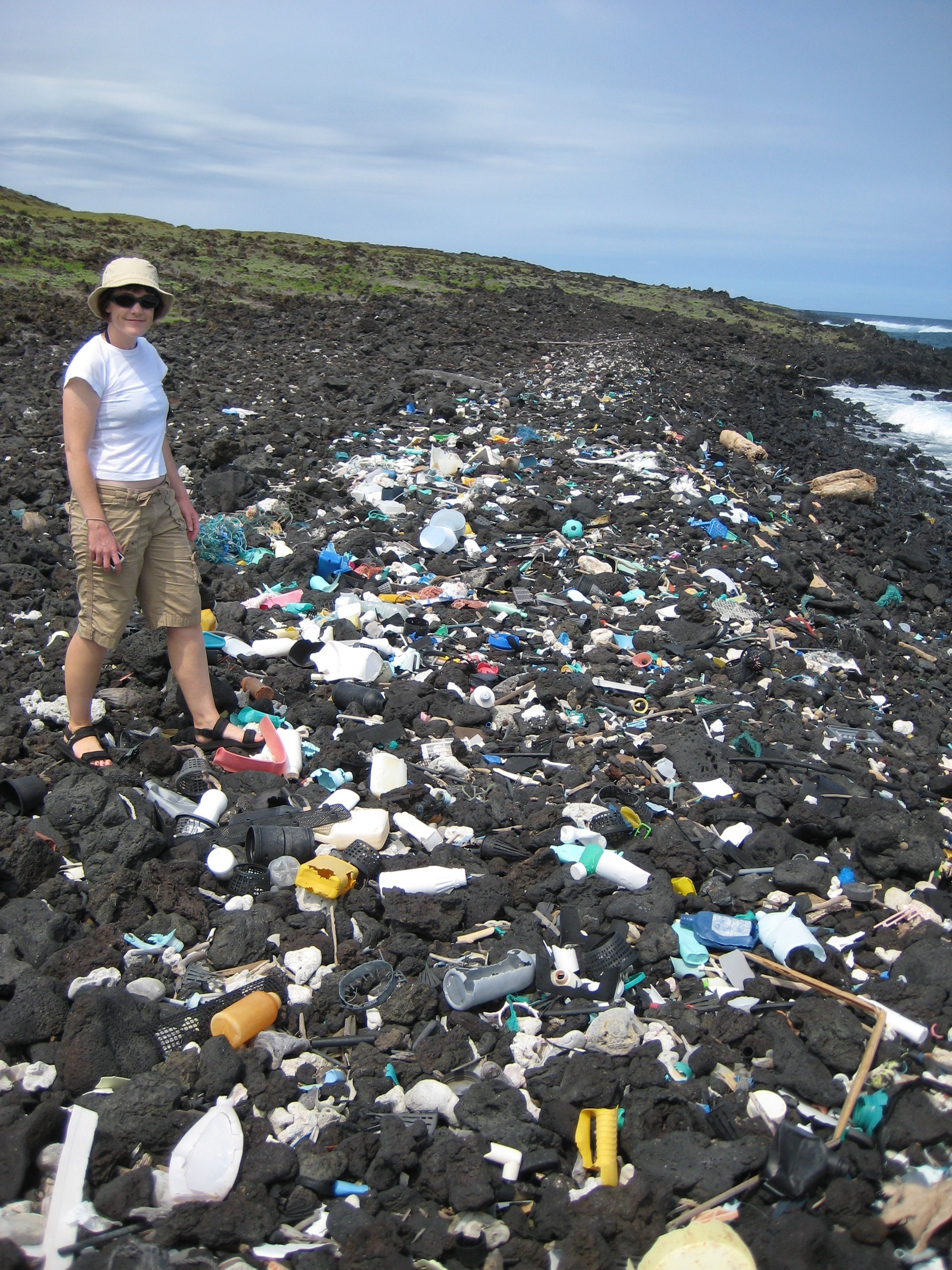
Plastic ocean debris littering Hawaiian shoreline. Hawaii is located near the center of the North Pacific gyre where debris tends to concentrate. (NOAA)

A team of volunteers, sailing in a flotilla of some thirty vessels, has successfully completed its month long research expedition through the western portion of the infamous Great Pacific Ocean Garbage Patch.

The first group of boats from the 30 vessel fleet, along with the Ocean Starr, a former NOAA research vehicle which served as the expedition’s “mother ship”, ended their journey when they sailed into in the port of San Francisco on Sunday, 8/23/15.

The Dutch environmental organization founded by Boylan Slat, called the Ocean Cleanup conducted its Mega Expedition Reconnaissance Mission through the massive collection of marine debris so that it could gather data to find out how much plastic is actually floating in the Pacific Ocean.

Nearly 8 million tons of plastic, mostly from land enters the ocean every year said a recent study.

Researchers say that portions of this huge collection of plastic, along with other forms of marine debris, gathers in five areas of the world’s oceans where the currents meet called the gyres.

A 2014 study found that currently there are at least 5.25 trillion pieces of plastic floating in the oceans with about third of it concentrated in the Great Pacific Garbage Patch.

The impacts of plastic pollution include harm to the environment, economy and human health.
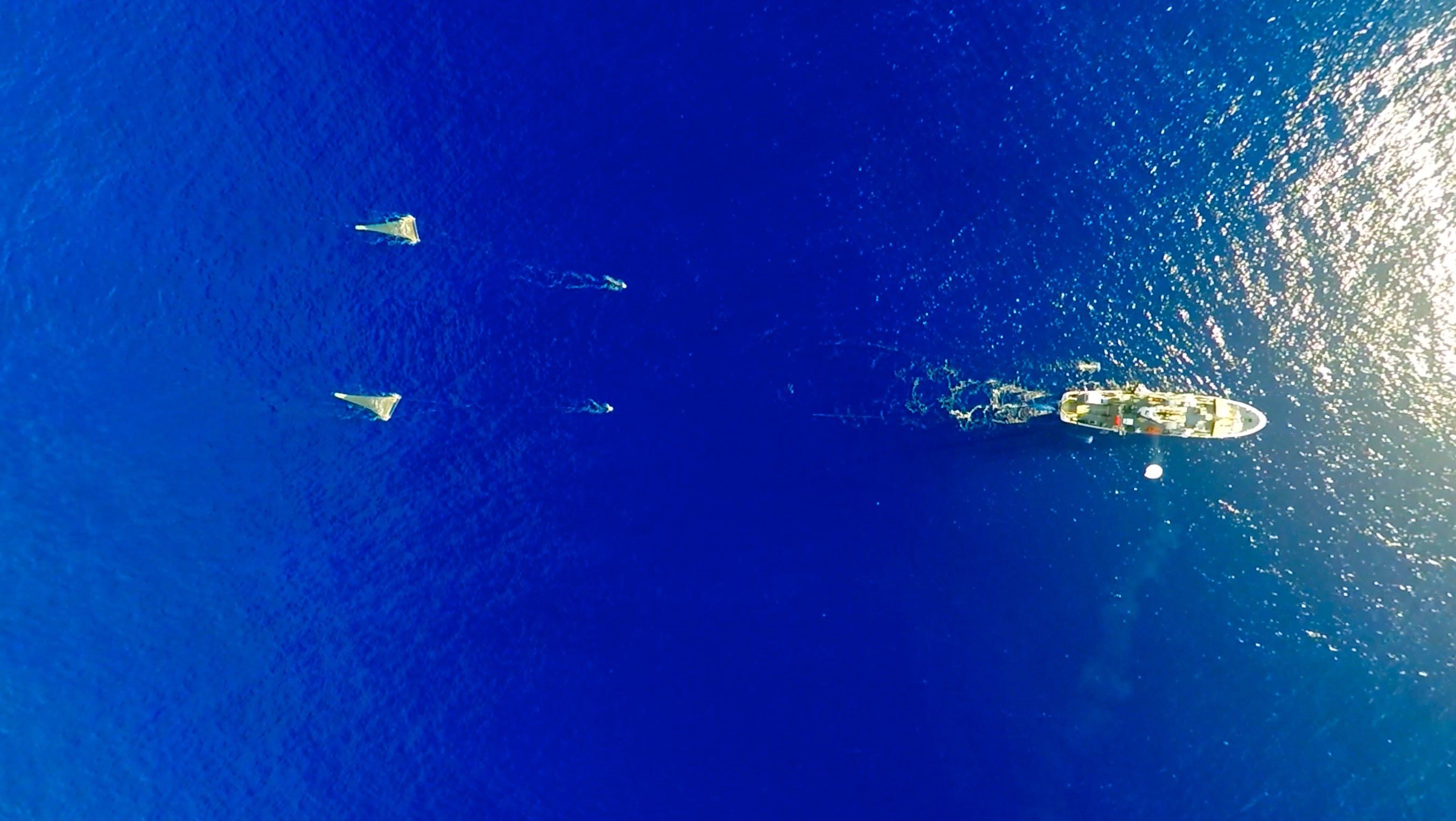
The Ocean Cleanup's Mega Expedition mothership R/V Ocean Starr is shown here deploying the two 6 meter-wide ‘mega nets’, two ‘manta trawls’, and its survey balloon with camera at the center of the Great Pacific Garbage Patch. ((C) The Ocean Cleanup/Skyframes)
The Ocean Cleanup’s Mega Expedition mothership R/V Ocean Starr is shown here deploying the two 6 meter-wide ‘mega nets’, two ‘manta trawls’, and its survey balloon with camera at the center of the Great Pacific Garbage Patch. ((C) The Ocean Cleanup/Skyframes)

About one million seabirds and one-hundred thousand marine mammals die every year due to plastic pollution, according to a 1997 study.

Toxic chemicals that are found in and can be amplified by the plastic pollutants enter the human daily diet through fish and other edible sea creatures who consume plastic polluted food.

Health effects that have been tied to these food borne chemicals include cancer, birth defects, immune system problems, and childhood developmental issues.

The Ocean Cleanup group plans to use the gathered data to create the first high-resolution map of plastic in the Pacific as well as to help in the preparation for the organization’s large scale ocean cleanup project that’s planned for 2020.

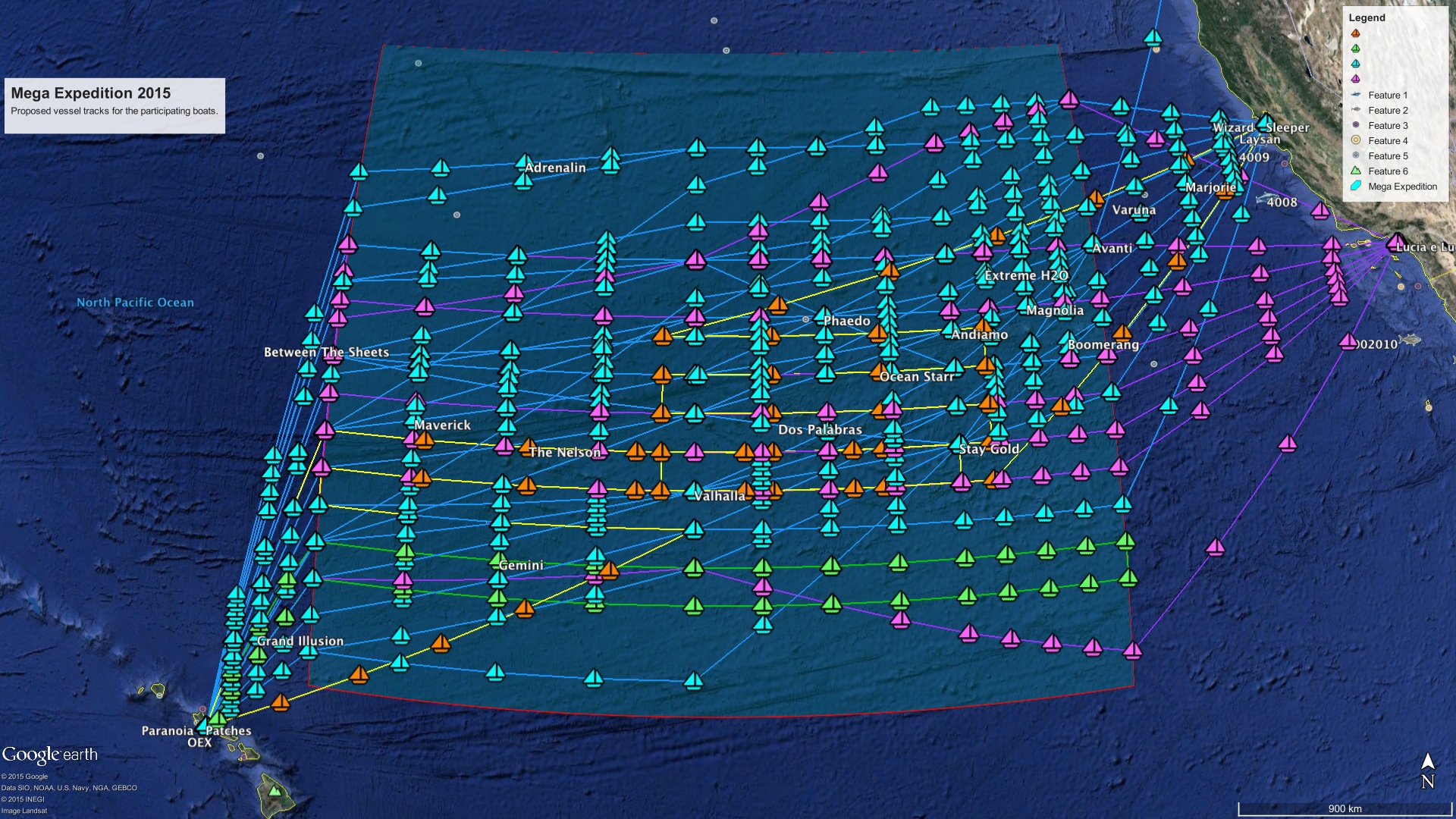
The thirty vessels sailed in parallel with each other over a 3.6 million square kilometer course in the Pacific Ocean. Over the month long period, the boats made around fifty crossings between the U.S. West Coast and Hawaii to conduct surveys on the amount of plastic they came across.
Map showing the 50 transects the Mega Expedition will perform based on routing information provided by the skippers before they left port.   Copyright: The Ocean Cleanup ((C) The Ocean Cleanup/Lys-Anne Sirks)
Map showing the 50 transects the Mega Expedition will perform based on routing information provided by the skippers before they left port.

Copyright: The Ocean Cleanup ((C) The Ocean Cleanup/Lys-Anne Sirks)

The expedition used a variety of measurement techniques to gather data.  Each of the boats towed a trawling net so that they could sample some of the smaller debris floating in the ocean. They tallied the larger pieces of debris with a special smart phone application called “The Ocean Cleanup survey app.”

To study large objects like ghost nets – fishing nets lost or left in the ocean – and debris from the 2011 Japanese Tsunami, the researchers also used an aerial camera system and giant nets that were aboard the Ocean Starr mothership.

According to a report from the Associated Press, most of the trash found by the expedition, including a one ton fishing net, were in medium to large pieces.

Rick Pantaleo
Rick Pantaleo maintains the Science World blog and writes stories for VOA’s web and radio on a variety of science, technology and health topics. He also occasionally appears on various VOA programs to talk about the latest scientific news. Rick joined VOA in 1992 after a 20 year career in commercial broadcasting.

Tuesday, August 25, 2015

Ship returns after monthlong study of plastic garbage in Pacific Ocean

Published on mlive by The Associated Press on August 24, 2015 
 
SAN FRANCISCO — Far away from California's coast, where the Pacific Ocean currents swirl, the blue of the sea was replaced by fishing nets, buckets, buoys, laundry baskets and unidentifiable pieces of plastic that floated past the Ocean Starr, a ship carrying a team of scientists and volunteers gathering data on plastic garbage.
 
"We were surrounded by an endless layer of garbage," sad Serena Cunsolo, an Italian marine biologist who works for The Ocean Cleanup. "It was devastating to see."
 
Cunsolo, 28, was one of a team of 15 researchers and volunteers aboard the Ocean Starr who a month ago set out from San Francisco to study the plastic waste as part of the "Mega Expedition," a major step in the organization's effort to eventually clean up what's known as the Great Pacific Garbage Patch.
 
The 171-foot mother ship, carrying massive white bags filled with plastic garbage, returned on Sunday to San Francisco along with two sailing boats with volunteers who helped collect the garbage samples.
 
Most of the trash they found, including a 1-ton fishing net, is medium to large-sized pieces, as opposed to confetti-like plastic shards that can easily enter the food chain after being eaten by small fish and birds and are extremely difficult to clean up, said Boyan Slat, who founded The Ocean Cleanup and has developed a technology that he says can start removing the garbage by 2020.
 
"It was a good illustration of why it is such an urgent thing to clean up because if we don't clean it up soon then we'll give the big plastic time to break into smaller and smaller pieces," Slat said.

Volunteer crews on 30 boats have been measuring the size and mapping the location of tons of plastic waste floating between the West Coast and Hawaii that according to some estimates covers an area twice the size of Texas.

Slat said the group will publish a report of its findings by mid-2016 and after that they hope to test out a 1-mile barrier to collect garbage near Japan. The ultimate goal is the construction of a 60-mile barrier in the middle of the Pacific.

The expedition was sponsored by The Ocean Cleanup, an organization founded by Slat, a 21-year-old innovator from the Netherlands who has envisioned using long-distance floating barriers that will attach to the seabed with an anchoring system used by oil-drilling rigs. The devices will target ocean currents full of waste and skim garbage from the surface while aquatic life and the currents themselves pass underneath.

He first became passionate about cleaning the oceans of plastic while diving in the Mediterranean Sea five years ago. "I was diving in Greece and realized that there were more plastic bags than fish, and I wondered why can't we clean this up," Slat said.

After dropping out of university after his first six months, Slat dedicated his life to developing the technology the group will start testing next year.

He decided to launch a kickstarter campaign and raised 2 million euros (about $ 2.27 million) that helped to launch his organization thanks to the success of a 2012 Ted Talk he gave about his idea that was viewed more than 2 million times. Soon, his innovative solution got the attention of major philanthropists in Europe and Silicon Valley, including Salesforce.com CEO Marc Benioff, who are helping pay for the data-gathering efforts and the technology's development.

The Pacific expedition, which will end in mid-September, will gather data that will be more extensive than what has been collected in the past 40 years. It also will give a better estimate of the how much plastic waste is in the Pacific Ocean, Slat said.

The boaters are using GPS and a smartphone app to search for and record the plastic. They take samples and ship them to the Netherlands, where the plastics are counted and recorded.

The Great Pacific Garbage Patch was discovered by Charles J. Moore in 1997 as he returned home from the Transpacific Yacht Race, which starts in Los Angeles and ends in Honolulu.

Monday, August 24, 2015

Watch the ocean's five islands of garbage form over the last 35 years


Published in Gizmodo by Casey Chan
Watch the ocean's five islands of garbage form over the last 35 years1
The ocean is filled with alien-looking creatures, a lot of natural beauty and a crap ton of garbage. There is so much garbage in the ocean that fully formed patches of our filth have spawned. In this fascinating visualization, NASA reveals how the ocean’s 5 islands of garbage came to be. You can see the swirling pattern of the ocean cause a natural graviation of garbage to each other as they settle down in different parts of the world.
We start with data from floating, scientific buoys that NOAA has been distributing in the oceans for the last 35-year represented here as white dots. Let’s speed up time to see where the buoys go...

...If we let all of the buoys go at the same time, we can observe buoy migration patterns. The number of buoys decreases because some buoys don’t last as long as others. The buoys migrate to 5 known gyres also called ocean garbage patches.

Thursday, July 2, 2015

Jack Johnson Takes Out Trash to Beat Plastic Pollution


2015-06-10-1433959250-1082970-JackJohnsonandBagMonster.jpg
published 06/15/2015 in Huffington Post  by Lisa Kaas Boyle

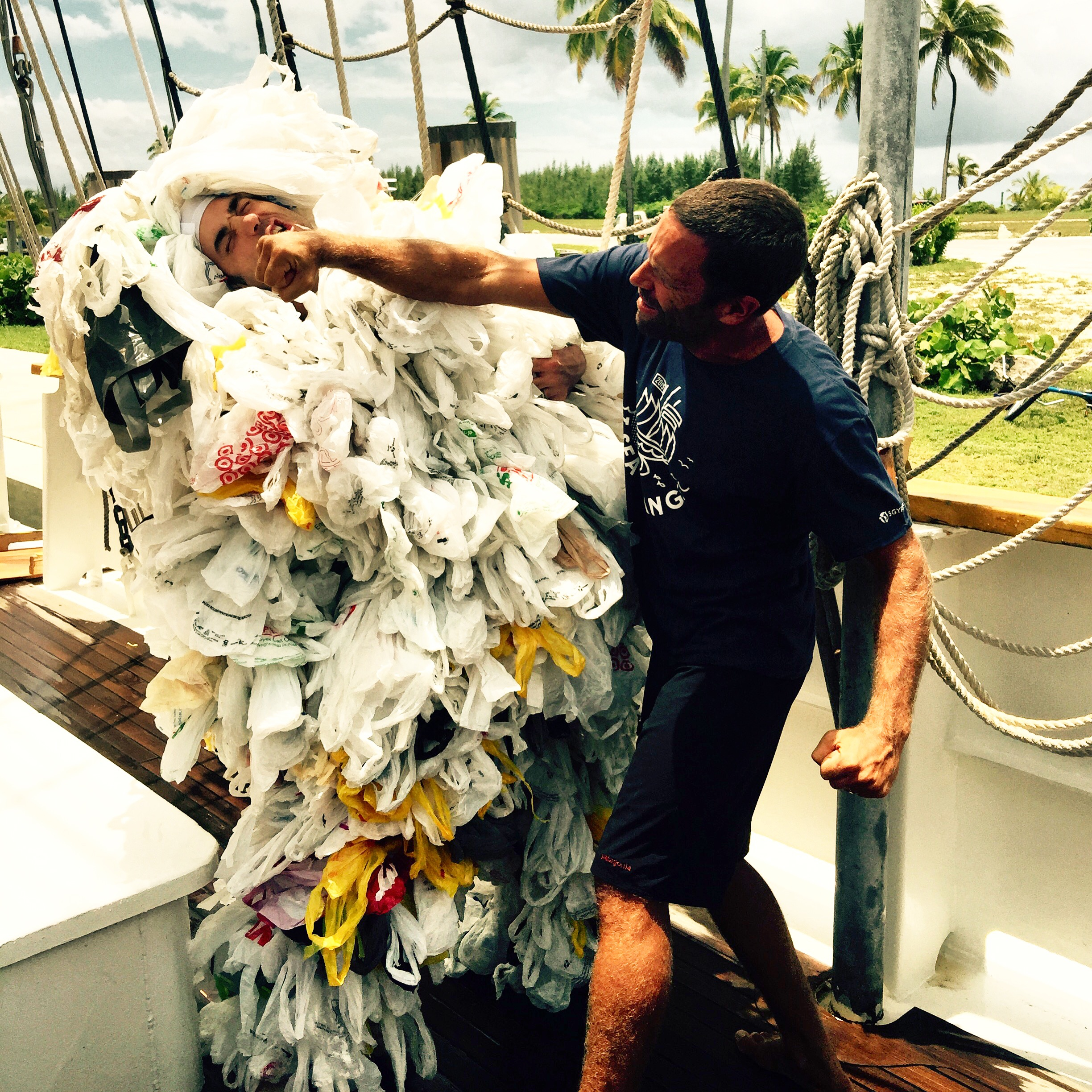
Musician and surfer Jack Johnson may seem laid back, but not when it comes to fighting plastic pollution. Aboard the Mystic Schooner on a research expedition with plastic pollution experts The 5 Gyres Institute, Johnson took a hard jab at The Bag Monster, alter-ego of Andy Keller, founder and president of Chico Bags.

Keller, who invented a reusable bag that folds into its own pocket, becomes The Bag Monster when he dons a costume made of 500 plastic shopping bags, the average number of bags used annually by a shopper who accepts plastic shopping bags. Johnson and Keller are both part of the 5 Gyres 2015 SEA (Science, Education, Action) Change Research Expedition which set sail from Miami with stops in Eleuthera, Bahamas and Bermuda before voyaging across the Atlantic to New York City. The explorers aboard the Mystic are trawling the seas to collect and study microplastics, fragments of our plastic civilization that are not contained and have spilled into our environment with significant impacts on sea creatures and our food chain.

Johnson lives in Hawaii, the first American state to ban plastic bags. His Johnson Ohana Charitable Foundation supports 5 Gyres, a research, education and policy institution committed to stopping plastic pollution. 5 Gyres is located in California, where Governor Jerry Brown signed a plastic bag ban this year.

Citizen Scientists aboard the Mystic Tall Sail Ship with 5 Gyres conduct hourly trawls for microplastics and keep a visual check for larger floating pieces of plastic pollution on the ocean surface. Jack Johnson was shocked at what he saw on his shift. As reported to the students of a local Bahamian school, The Island School, he saw 47 pieces of plastic go by during the first ten minutes of his hour watch, well outside the Atlantic Gyre.

Also contributing to the voyage, participating in research, and giving presentations aboard the vessel are Celine Cousteau, Dan and Keith Malloy, champion surfers and filmmakers; Kimi Werner, champion spearfisher and freediver; Mark Cunningham, legendary body boarder and subject of the Malloy brothers' film Come Hell or High Water, which was screened at The Island School to students who participated in a 5 Gyres produced Youth Summit on plastic pollution. Students shared their own research projects including a study of plastic pollution chemical impacts on fish flesh in the Bahamas.
5 Gyres co-founder and research director Marcus Eriksen is the lead author of recent research on the amount of microplastics in world oceans.

The amount, more than 5 Trillion Plastic Pieces weighing over 250,000 Tons afloat at sea, is surprising because subtracting the amount of plastic that is recycled, landfilled and burned leaves a huge amount of plastic unaccounted for by the global estimate in our ocean's surface waters. One study estimates the amount of plastic waste lost at sea at 8 million metric tons: the equivalent of "five plastic grocery bags filled with plastic for every foot of coastline in the world."

Eriksen hypothesizes that the lost plastic has entered the food chain as it is consumed by marine life and is also settling to the benthos at the bottom of the ocean. 5 Gyres' research shows that 95% of the marine plastics at the surface of the ocean are smaller than a grain of rice, and thus enter the food chain as easily as plankton. The small pieces of plastics have been tested and found to adsorb oily chemicals persistent in the aquatic environment such as petroleum, flame retardants, and even PCBs and DDT that persist even though banned decades ago. The microplastics have been shown to accumulate these toxins in percentages a million times higher than the surrounding waters.

The Mystic Schooner is set to dock in New York City on June 23rd. All the participants of the Sea Change Expedition have direct evidence of humankind's impact on the 70 percent of the earth's surface that is ocean. The explorers know for certain now that there is no "away" in our "throw away" culture of single use plastics. Used for brief moments, our disposable plastics persist in our environment indefinitely.

But there is great hope as more voters and consumers are educated about plastic pollution through organizations like 5 Gyres, Johnson's own Plastic Free Hawaii program, and other groups such as the Bahamas Plastic Movement and the Plastic Pollution Coalition. Next on the Agenda for 5 Gyres: linking more research to policy solutions as with recent successes banning plastic microbeads in personal care products in numerous states.