A blog set out to explore, archive & relate plastic pollution happening world-wide, while learning about on-going efforts and solutions to help break free of our addiction to single-use plastics & sharing this awareness with a community of clean water lovers everywhere!

Tuesday, December 9, 2014

Microfiber is polluting our oceans. Let’s stop it!

Microfiber is polluting our oceans. Let's stop it!

Microfiber, the fabric used to make synthetic clothing, is a major contributor to ocean plastic pollution. Here’s how you can help stop it.


We talked not too long ago about plastic microbeads polluting the Great Lakes and harming marine life. It turns out this isn’t the only way that our fashion and beauty choices are connected to plastic pollution. A 2011 study found that plastic microfiber from clothing is a major contributor to ocean plastic pollution.

A 2011 study might sound like old news, but as Derek Markham at Treehugger points out, “unfortunately, [this issue] doesn’t seem to have gotten any traction in the industry or in the media since then.” That means there’s still work to do.

Every time we put our synthetic clothing through the wash, we send around 1900 pieces of plastic microfiber down the drain. Those microscopic pieces of plastic make their way through our sewage systems and eventually into the ocean. While 1900 pieces of microscopic anything isn’t much, this adds up when you consider how much of our clothing is made from synthetic materials. For some of us, everything we send into the wash contains at least some microfiber.

This is an issue that we can’t solve by buying second hand, because so much second hand clothing is made from synthetic fibers, too.

So, how can we stop the stream of microfiber into our oceans?

Sticking to natural materials is a good place to start. Organic cotton, hemp, and linen are all good options. When you’re shopping, keep an eye out for fabrics that don’t look totally natural. Sateen cotton is a good example. That sine on sateen fabric comes from – you guessed it – plastic.

Unfortunately, finding the clothing you want made from natural materials isn’t always easy. That’s why the real area where we need to see a change isn’t in consumer habits. It’s at the industry level. But as consumers, we have powerful voices! The folks at Story of Stuff have launched a campaign aimed at one of the leading ethical sportswear companies: Columbia Sportswear.

The petition asks Columbia to “Become an industry leader by researching how to make clothing that doesn’t pollute our oceans with plastic!”

If you want to get heard on this issue, you can sign the petition here. You can also contact your favorite clothing manufacturer and tell them that you’re concerned about microfibers. The petition page links to a Greatist list of sportswear companies that might be most open to our voices on the microfiber issue.

Image Credit: Washing Machine photo via Shutterstock

Tuesday, December 2, 2014

Europe’s ‘historic moment’ on plastics bags contested by industry advocates

The EU has agreed to curb the use of plastic bags in all member states.[Kerry Lannert/Flickr]
 
As lawmakers reached agreement this week to limit the use of plastic bags across Europe, industry voices warned that such rules will have a negative impact on trade in Europe's internal market.

The ban could also lead to different standards in legislation in member states and ultimately, to a ban on other types of packaging, according to PlasticsEurope, the association of plastics manufacturers.

The European Parliament and the Council agreed on Friday (21 November) on EU-wide legislation obliging member states to reduce the use of plastic bags. The law will apply only to bags with a thickness below 0.05mm, because they are less reusable, and turn into waste more quickly.

'Historic moment'
“This is a historic moment for all of Europe. For the first time ever, we have agreed on ambitious measures to reduce the amount of plastic waste in the environment,” said Margrete Auken, a Danish MEP from the Greens/EFA group, who negotiated the law on behalf of the European Parliament.

The new agreement, which is obligatory in all EU countries, gives national governments two ways to implement it. Either reduce consumption by 90 lightweight bags per citizen by 2019, and 40 bags by 2025, or have a mandatory charge by 2018.

These reduction targets will “limit the negative impacts of plastics carrier bag littering on the environment and encourage waste prevention”, according to a statement posted on the Council's website. Most of the plastics bags end up as waste in the EU waters, and it takes “hundreds of years before they are fully degradable”, the statement said.

Average consumption of single-use plastic bags was found to be at 176 bags per person per year in 2010.

Under the new law, member states can also introduce a complete ban on plastic bags at their own discretion. Such a decision, if implemented, is against the principle of free movement of goods, said PlasticsEurope.

A full prohibition will disrupt the trade flow between the member states, as it will limit the export-import possibilities of such goods, it warned.

“It opens the door for member states to ban not only plastic bags but other types of packaging,” said PlasticsEurope. “Such an inconsistent political framework […] would hinder investments and innovation and would create barriers to trade in packaged goods in Europe.”

Make users pay
The industry said that the best way to discourage the use of plastic bags is to make the users pay, like in Ireland or Denmark.

In Ireland, plastic bags accounted for 5% of litter before the levy was introduce in 2002, and then dropped almost overnight to around the current level of 0.25% in 2010, according to a Commission's impact assessment.

“Charging for bags can have a positive effect on raising consumers' awareness of the economic value of the resources that have been used to produce the bag,” said PlasticsEurope.

Under the new law, the governments have to organise public information campaigns to explain the environmental consequences of excessive use of lightweight plastic bags.

The new bill, despite receiving full support from the Parliament and the Council, was not backed by Tory MEPs. The proposal was seen as an interference in a national matter. Out of 60 votes in favour in the Environment Committee in the European Parliament, three legislators from the European Conservatives and Reformists abstained from voting.

"Plastic bags blight our countryside and oceans and kill millions of marine animals each year. I'm deeply concerned that Conservative MEPs refused to support legislation to reduce their use across the EU," said MEP Catherine Bearder, a Liberal Democrat.

But the British government is already planning to introduce a 5p charge for plastic bags next year, said Bearder. "It makes sense for the rest of Europe to follow suit."

The bill will now be formally adopted by the Council in December, and will be subject to a final vote in Parliament in early 2015.
 
Positions: 
 
The Committee of the Regions expressed disappointment as EU Member States and MEPs came to an agreement which would ensure that by 2019 no more than 90 plastic bags per person per year will be used. The Committee – which represents Europe's local and regional authorities - had hoped for an outright ban of free plastic bags by 2020, compulsory EU targets for all Member States and the introduction of charges for all carrier bags to ensure an 80% reduction.

After the new European Commission considered pulling the entire package to reduce plastic bag usage, speaking on behalf of the Committee Cllr. Linda Gillham said, "There were hopes that governments would use the opportunity to rid Europe of the unnecessary over-use of plastic bags once and for all. But as theEuropean Commission was close to pulling the plug on the entire proposal, we are relieved - as this agreement is better than no agreement.

The proposal to cut the average number of lightweight plastic bags each year from 198 to 90 per person by 2019 is a compromise. It is a recognition that the environmental, social and economic consequences of the 100bn tons of plastic bags thrown away each year in Europe are illogical and unacceptable".
 
Timeline: 
  • December, 2014: Adoption in the Council
  • Early 2015: European Parliament final approval
External links: 

EU institutions

Industry

That Takeout Coffee Cup May Be Messing With Your Hormones

A new study suggests that whole classes of BPA-free plastics—including the kind in styrofoam—release estrogenic chemicals.


Most people know that some plastics additives, such as bisphenol A (BPA), may be harmful to their health. But an upcoming study in the journal Environmental Health finds that entire classes of plastics—including the type commonly referred to as styrofoam and a type used in many baby products—may wreak havoc on your hormones regardless of what additives are in them.
The study's authors tested 14 different BPA-free plastic resins, the raw materials used to make plastic products, and found that four of them released chemicals that mimic the female hormone estrogen. That's not surprising. As Mother Jones reported earlier this year, many BPA-free plastic goods—from baby bottles and sippy cups to food-storage containers—leach potentially harmful estrogenlike chemicals.

But until now, it wasn't clear what role the resins played. The new study suggests that sometimes the resins themselves are part of the problem, though additives such as dyes and antioxidants can make it worse.

In the case of polystyrene, the resin used in styrofoam and similar products, the authors tested 11 samples and consistently found estrogen seepage after exposure to intense steam or ultraviolet rays.

Styrofoam is a registered trademark of Dow. The company stresses that its product is used for crafts and building insulation, not food and beverage containers. ("There isn't a coffee cup, cooler, or packaging material in the world made from actual Styrofoam," according to Dow's website.)

But generic polystyrene foam, which most people call styrofoam anyway, is ubiquitous in the food services industry, where its found in everything from meat trays to takeout containers. Polystyrene resin—which the Environmental Protection Agency has labeled a suspected carcinogen—is also used to make hard plastic items, including utensils and toothbrushes.

The study also looked at three different types of Tritan—a novel plastic marketed as a safe, estrogen-free alternative to BPA-laden polycarbonate—and found that all of them leached estrogen-like chemicals.

That's bad news for consumers, given that hundreds of household products are made from Tritan. Below are some examples, with the caveat that not all of these finished products have been specifically tested for estrogenic effects:
  • CamelBak Eddy Kid's BPA-free water bottle
  • CamelBak Relay water filtering pitcher
  • Foogo by Thermos sippy cups
  • Hamilton Beach Multi-Blend blender
  • Nalgene BPA-free water bottles (color matters; see the chart below)
  • OXO Good Grips LockTop food-storage containers
  • Rubbermaid Hydration Chug bottles
  • Rubbermaid carafes
  • Rubbermaid Premier food-storage containers
  • Thermos Under Armour water bottles
  • Weil Baby bottles
  • Weil Baby sippy cups
  • Whole Foods bulk bins
The new paper was authored by University of California-Davis toxicologist Michael Denison, who coinvented a common cell-based test for estrogen-mimicking compounds, and by scientists from CertiChem, a commercial lab in Austin, Texas.

As part of the study, researchers  soaked plastics resins in a variety of common solvents and tested the chemicals that seeped out using a line of breast cancer cells (MCF-7) that proliferates in the presence of estrogen and a line of ovarian cancer cells (BG-1) that lights up when exposed to the female hormone.

The 200-plus samples of Tritan resins that were tested consistently leached estrogenlike chemicals after being exposed to a type of ultraviolet ray found in sunlight (UVA) and another kind that some parents use to sterilize baby bottles (UVC). In some cases, samples that hadn't even been exposed to UV light also seeped estrogenic compounds.

While the authors didn't identify the specific hormone-mimicking chemical (or chemicals) that leached from the resin, they tested one Tritan component—triphenyl phosphate (TPP)—and found it was estrogenic.

These findings are consistent with data collected by Tritan's manufacturer, Tennessee-based Eastman Chemical. In 2008, the company commissioned a study that used computer modeling to predict whether various Tritan ingredients could imitate estrogens, based on their chemical structures. It found that TPP was likely to be more estrogenic than BPA. As we previously reported:
Eastman, which never disclosed these findings to its customers, later commissioned another study, this one involving breast cancer cells. Again, the initial results appeared positive for estrogenic activity. In an email to colleagues, Eastman's senior toxicologist, James Deyo, called this an "oh shit moment."
The company now says that additional testing has determined that Tritan is not estrogenic, and insists that there is little risk of TPP leaching from Tritan containers because it breaks down during the manufacturing process. "We have no reason to expect TPP to be present in the product as supplied by Eastman," says Maranda Demuth, an Eastman spokeswoman.

But confidential documents the company filed with the US Food and Drug Administration list TPP as one of the "substances that may be present in food after contact with Tritan."

While the specific health effects of TPP are unknown, a 2012 literature review by a dozen prominent scientists found "substantial evidence" that estrogen-mimicking chemicals are harmful even at minute doses. BPA, the most studied of the lot, has been linked to myriad problems, including asthma, cancer, infertility, low sperm count, heart disease, and attention-deficit/hyperactivity disorder (ADHD).

In some cases, the effects appear to be handed down to the offspring of the person exposed.
Questions about Tritan's safety first arose in 2011, when CertiChem scientists and V. Craig Jordan, a well-known pharmacologist and Georgetown University professor, published a study in the National Institutes of Health journal Environmental Health Perspectives.

The group tested a wide variety of plastic products—including many made from Tritan—and found that most leached estrogenic compounds when exposed to conditions such as UV rays or heat from a microwave. These findings touched off a fierce battle pitting the $375 billion plastics industry against CertiChem and its founder, George Bittner, who is also a neurobiology professor at the University of Texas-Austin. From our earlier report:
The month after Bittner's study appeared, the American Chemistry Council contacted Chris Borgert, the former tobacco industry scientist who stymied the EPA's Endocrine Disruptor Screening Program. According to internal emails, the council and the Society of the Plastics Industry offered to pay him $15,000 to write a brief letter to the journal's editor refuting CertiChem's study…
At the same time, Eastman laid plans to sue CertiChem and PlastiPure for false advertising. Expecting that Bittner would lash out after being served papers, the company launched a preemptive PR blitz.
"By proactively promoting Tritan safety," an internal memo noted, "it will put PlastiPure in a position to have to prove Eastman wrong." The company also paid a scientist named Thomas Osimitz $10,000 to author a research paper on Tritan.
While Osimitz was ostensibly working independently, Deyo, the Eastman toxicologist, micromanaged the process, from designing the study to writing the introduction. Deyo's study design virtually guaranteed estrogenic activity wouldn't be found.
Specifically, Deyo chose a breed of rat that doesn't readily respond to synthetic estrogen. He also instructed the researchers to test only select Tritan ingredients, as opposed to Tritan itself. TPP, the chemical that had raised red flags, was not tested.

After publishing its findings in the summer of 2012, Eastman sued CertiChem and its sister company PlastiPure for false advertising, alleging that they were spreading false information to generate demand for their own services.

Despite evidence that the manufacturer's own studies found that Tritan may be estrogenic, Eastman won. A federal judge barred the labs from discussing their Tritan findings, except in scientific settings.

CertiChem has made good use of that exception. Earlier this year, it released a second study focusing on hard, clear, reusable plastic products—most of which leached estrogenic compounds after exposure to UV rays. And some Tritan products did so even before they were exposed to these stressors. The chart below shows the company's results for a sampling of products.

Are There Hormone-Altering Chemicals in Your Plastic Bottle?

Estrogenic activity before and after UV exposure
Product Type of plastic Before UV exposure After UV exposure
Baby bottles        
AVENT Polyethersulfone (PES) Not tested Positive
Born Free Polyethersulfone (PES) Not tested Positive
Green to Grow Polyethersulfone (PES) Negative Positive
Evenflo Tritan Not tested Positive
Weil Baby Tritan Negative Positive
Sippy cups        
CamelBak, blue* Tritan Positive Positive
Weil Baby Tritan Negative Positive
Water bottles        
CamelBak, black Tritan Not tested Positive
CamelBak, blue Tritan Not tested Positive
Nalgene, blue* Tritan Negative Positive
Nalgene, green* Tritan Negative Negative
Topas Cyclic Olefin Copolymer (COC) Negative Negative
Zeonor Cyclic Olefin Polymer (COP) Negative Negative
Other products        
Crate & Barrel wine glasses, red* Acrylic Positive Positive
Disposable cup Polystyrene (PS) Positive Not tested
Lock & Lock food containers Tritan Positive Positive
Clamshell takeout container* Polystyrene (PS) Positive Not tested

*Tested using BG-1 cells
Read about the methodology behind this chart.
Source: George D. Bittner, et al, Environmental Health
Chart by Jaeah Lee

The most recent study shows that the Tritan resin itself leaches estrogenlike chemicals, at least in a laboratory setting.

It's not all bad news, though. The paper also names a number of resins the authors found to be free of estrogenic compounds. These include PETG (polyethylene terephthalate, glycol-modified), which is sometimes used in food and beverage packaging, and two relatively new resins, COC (cyclic olefin copolymer) and COP (cyclo olefin polymer), which are often used by the medical industry.

But Bittner, the study's lead author, warns that even products made of those plastics aren't guaranteed to be safe, since many plastic additives are also estrogenic. "Manufacturers don't tell the public what additives they're using," he says. "And in most cases they're not testing them for estrogenic activity because they don't have to. This is a case in which the consumers are going to have to demand safer products. If they take a stand, they can produce a very quick change in the market. "

Monday, December 1, 2014

Sea Shepherd Spearheads Cleaning Up the Oceans

Published in the Huffington Post
The oceans are in dire straights, they are suffocating from 772 million tons of plastics.

Join me for another segment of SOS from Los Angeles, California as I show how problem solvers and innovators are turning ocean plastics into high-performance denim.

For every problem there are at least three solutions. Let me tell you of one very exciting solution that's turning ocean plastic into fashion and making a difference.
2014-11-21-OceanPlasticsEarthDrReeseHalter.gif
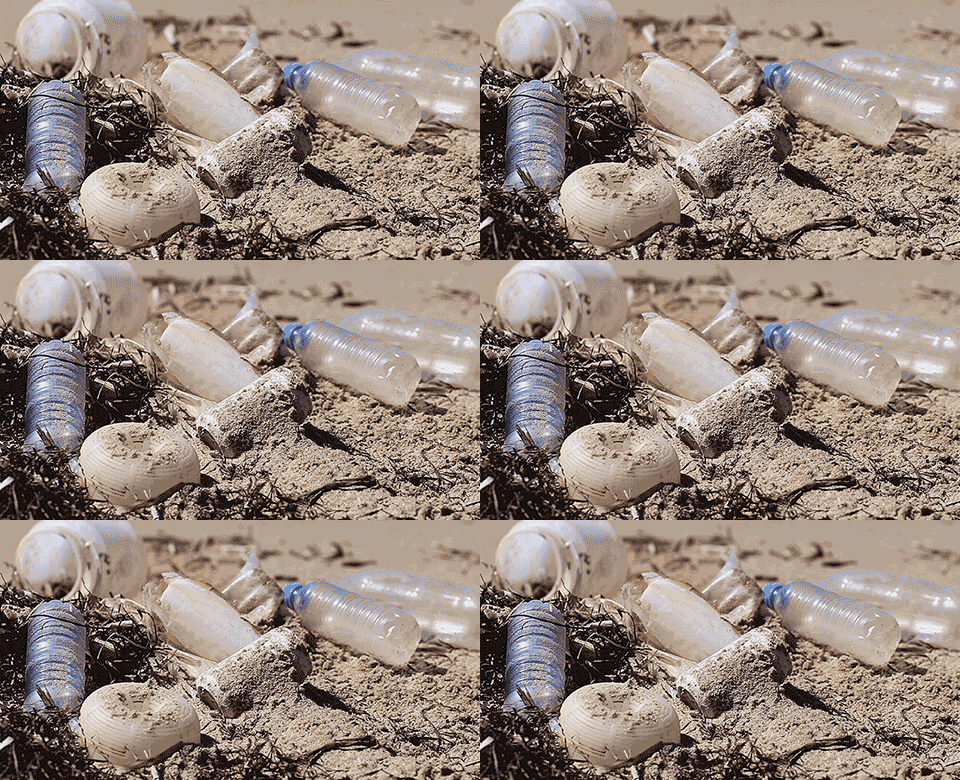
On average each person in America uses 326 pounds of plastic a year and much of it is winding up in the oceans. Photo credit: RawForTheOceans.g-star.com
The Vortex Project is a collaboration between eco-material innovator Bionic Yarn, Sea Shepherd Conservation Society and Parley -- for the Oceans.

2014-11-21-PharrellWilliamsEarthDrReeseHalter.jpg
"The oceans need us now," says American recording artist, Curator and Co-Designer of RAW for the Oceans and Creative Director of Bionic Yarn -- Pharrell Williams 
Using Bionic Yarn's unique fibers made from ocean plastic, denim brand G-Star is producing G-Star's "RAW for the Oceans," a line of denim with a purpose that uses ingenious technology.
2014-11-21-RawfortheOceansEarthDrReeseHalter1.jpg
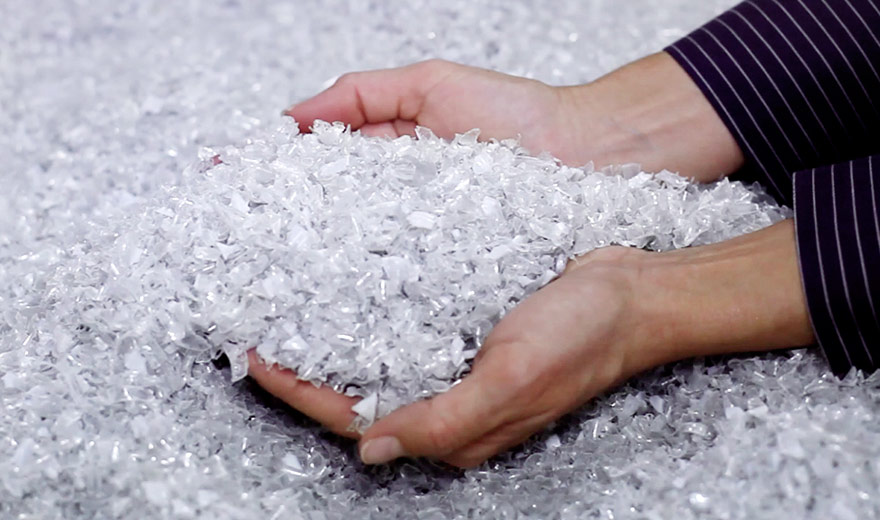
Retrieved ocean plastic is broken down into chips then shredded into fibers. Photo credit: RawForTheOceans.g-star.com
2014-11-21-RawfortheOceansBionicYarnEarthDrReeseHalter.jpg
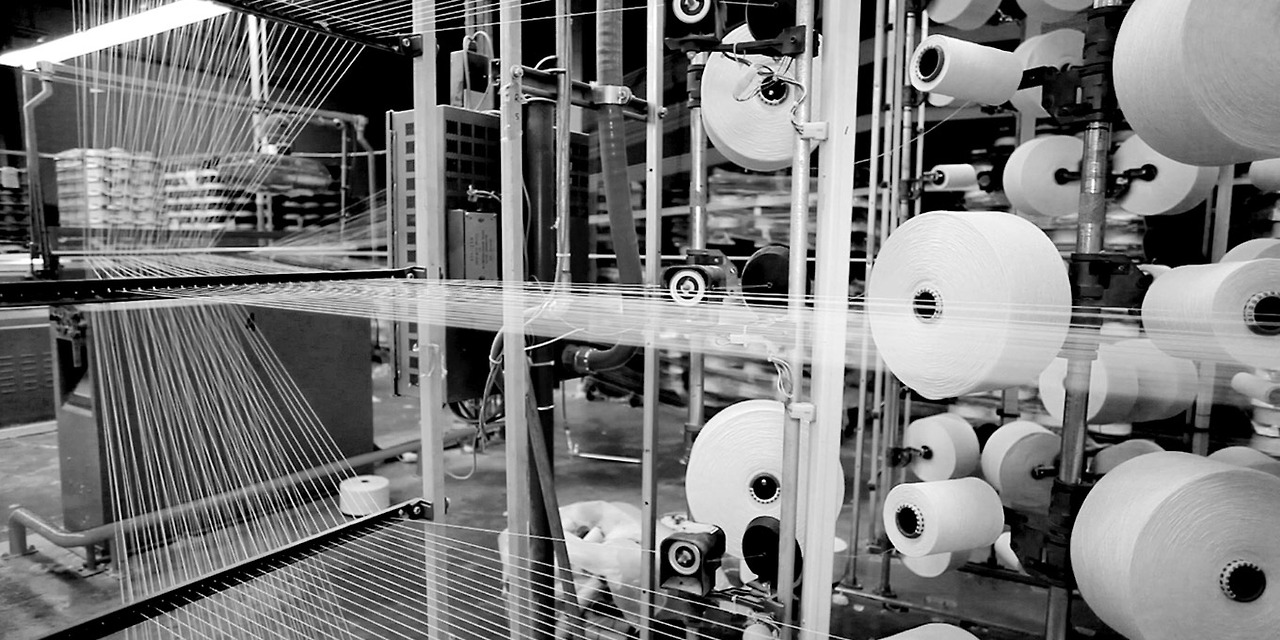
The ocean plastic fiber is then spun into a stronger core yarn, and then helixed with soft cotton to form bionic yarn. Photo credit: RawForTheOceans.g-star.com
2014-11-21-RawfortheOceansDenimEarthDrReeseHalter.jpg
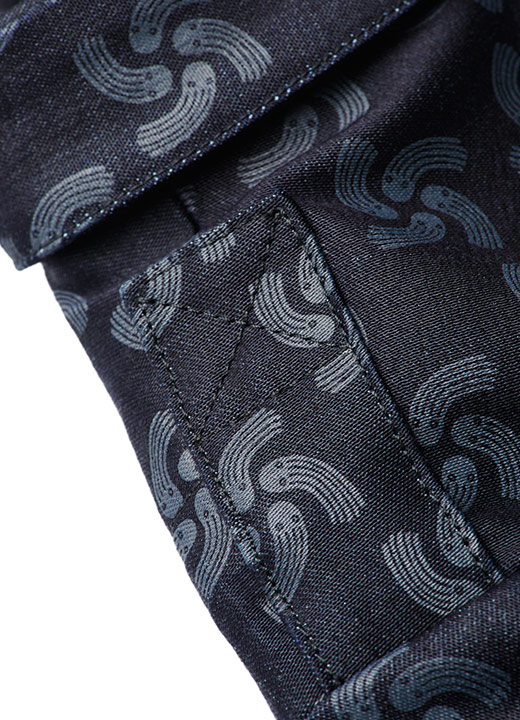
The bionic yarn is then weaved or knitted into snazzy "RAW for the Oceans" fabric. Photo credit: RawForTheOceans.g-star.com

G-Star is transforming ocean plastic into high performance denim that feel and ages just like traditional denim.
2014-11-21-RawfortheOceansBionicYarnEarthDrReeseHalter2.jpg
Bionic® yarns are up to 400% stronger than conventional yarns. Photo credit: RawForTheOceans.g-star.com

Kudos to Sea Shepherd for using scientific innovation and awareness-building to mobilize teams from around the globe to clean up the oceans and our beaches.

2014-11-21-SeaShepherdAustraliaEarthDrReeseHalter
Please join me this Christmas in Australia for the launching of my ninth book "Shepherding the Sea: The Race to Save our Oceans."

Join Earth Dr Reese Halter in his crusade to protect our planet by watching Earth Calling SOS

100,000 animals drowning every year in the plastic we throw away

Published in Care2.com November 29, 2014 by Abigail Geer
100,000 Animals Drowning Every Year in The Plastic We Throw Away
With an estimated 46,000 pieces of plastic floating in every square mile of our oceans, our addiction to plastic is killing countless animals in some of the most horrific ways imaginable.

Considered by many as a threat worse than climate change, in a disturbing new report, leading expert Charles J. Moore, says that plastic is ‘choking our future in ways that most of us are barely aware.’
From takeouts and coffee cups, to toothbrushes and tires, plastic has become an integral part of human existence, but the real problem is where all the plastic that we throw out every day ends up.

Animals are the Victims of Our Throwaway Society
Plastic production has increased by more than 500% in the last 30 years, and with most people not giving a second thought as to what happens after they toss it out, plastic is taking over the ocean and threatening the animals that call it their home.

Huge garbage patches the size of Wales are forming in the world’s oceans, comprised of cigarette lighters, shampoo bottles, yogurt pots, plastic rings from six packs and much more. For hundreds of miles without end, Moore’s research vessel passed plastics of every description. During his trip Moore came across one of the most upsetting scenes he has ever encountered.

“I’ve seen many scenes in my work studying whales, dolphins and marine mammals, both uplifting and disheartening. But one of the saddest was the sight of a young grey seal pup in a colony on the idyllic shores of Cape Cod.

It was an otherwise healthy animal — but with a plastic strap looped round its neck — the kind you get around a parcel. Slowly but surely, as the animal grew, its noose would tighten.
As I looked at the animal, I could foretell its painful death, probably from starvation, as the seal became unable to feed.”

Hundreds of thousands of sea turtles, whales and other marine mammals are dying each year as a result of eating plastic, just like the sperm whale that was recently discovered dead in Spain with 100 plastic bags inside its stomach.

As if these figures aren’t shocking enough, experts also believe that more than 1 million seabirds are also being killed from ocean pollution, ingestion or entanglement.

We are the ones creating all this rubbish, and as such we share a collective responsibility for the deaths it is causing. We cannot shake it from our conscience by ignoring the situation or turning a blind eye; it is time to take responsibility and make changes.

What You Can Do To Help
The best way to stop plastic pollution in our oceans is to make sure it never reaches the water in the first place. Reducing, reusing and recycling is the way forward.
Take action today by following these steps to help cut down on your plastic use and protect our oceans:
  • Bring your own fabric bags to the store
  • Always choose reusable items whenever possible
  • If you need to use plastic, make sure you recycle after you’ve used it
  • Let businesses know that you want packaging that is fully recyclable
  • Host a clean up day where you get together with a group of volunteers to pick up trash at your local beach
  • Support and spread the message of organizations fighting plastic pollution

Read more: http://www.care2.com/causes/100000-animals-drowning-every-year-in-the-plastic-we-throw-away.html#ixzz3Kg2UOf00

Business Impacts of California’s New Plastic Bag Ban

Published by EFT Trends November 30th by Iris.xyz

In late September, California Governor Jerry Brown signed into law two solid waste bills with far reaching effects for state businesses.

Although the new regulations are similar to laws passed by local governments across the country, this marks the first time that such regulations have passed at the state level and signals the continued momentum for policies that reduce waste and increase diversion rates.

It’s worth taking a closer look at these two laws, which could be used as a model for other states and municipalities.1

Today’s post will focus on the plastic bag ban and the reasons why other cities and states are moving to enact similar laws. My second post will discuss the composting mandate for businesses of a certain size.


PLASTIC BAG BAN
The plastic bag ban will primarily impact businesses in the food and retail markets. Similar to laws passed in many cities nationwide―including Seattle, WA, San Francisco, CA, Santa Fe, NM, Westport, CT, to name just a few―California’s law will ban retailers, grocers, and pharmacies from providing customers with single-use plastic bags.

Single-use recycled paper bags will not be banned, but the law requires stores to charge customers a ten cent fee for each single-use bag. The ten cent charge is a common feature of many plastic bag laws. The revenue collected goes back to the store, not to the government. The reasons for the fee are twofold:
  1. To discourage consumers from using single-use bags, thus incentivizing the use of reusable cloth bags; and
  2. To offset the added expense of paper bags to businesses, which generally cost more than the alternative plastic bags.
Though companies may be at the frontline for consumer complaints, past experience demonstrates that the public is able to adapt to the new ban quickly. Successful bans have been implemented in numerous cities since as early as 2008.


WHAT’S THE PROBLEM WITH PLASTIC BAGS, ANYWAY?
There are many reasons for the growing number of plastic bag bans around the country, from lowering costs to local governments to making recycling less expensive for processors and improving the environment.


COST TO LOCAL GOVERNMENTS
For local governments, plastic bags are expensive. In many solid waste markets, shipping a ton of material to a landfill is more expensive than recycling a ton of material. Plastic bags have a particularly low recycling rate nationwide, meaning a lot are ending up in landfills. The EPA estimates that only 12% of plastic bags, sacks, and wraps gets recycled every year (compare that number to the 55% recycling rate for aluminum cans). In addition, the recycling market for plastic bags is very poor and processors often lose money when they attempt to sell the plastic bags they do collect. As a result, it all adds up to a lot of plastic bags being shipped to landfills at a high cost to local governments.

Governments pay for plastic bags in other ways as well, particularly in areas with a lot of beachfront property, like California. Plastic bags are one of the most common sources of litter, polluting parks, oceans, and other waterways. California’s efforts to clean up litter and prevent it from ending up in oceans and on beaches have been estimated to cost over $100 million per year alone. Reducing the number of plastic bags from entering the waste stream will improve local government’s bottom line.


RECYCLING IMPACTS
Though the recycling rates are poor, the plastic bags that are sent to recycling processors cause a lot of problems that raise the cost of recycling all materials. At recycling facilities, known as Material Recovery Facilities (MRFs), plastic bags get jammed in sorting machinery and have to be manually removed by workers with box cutters. In large MRFs that process over 130,000 tons of material annually, that can mean stopping the machines over six times a day at a cost of over a million dollars per year.


ENVIRONMENTAL IMPACTS
Governments spend money to keep plastic bags out of the ocean and other sources of water because they are harmful to marine ecosystems. Plastic bags contribute to the large plastic “vortex,” or gyre, that’s collected in the Pacific Ocean. The EPA now estimates that the vortex is twice the size of Texas. After entering a marine environment, plastic bags can also break down into small fragments that are consumed by fish and other aquatic life.

In addition to those effects, the energy to produce a plastic bag results in more greenhouse gas emissions than a reusable bag. According to the EPA, using ten plastic bags per week results in more than three times the amount of greenhouse gas emissions over two years than using a reusable bag. Manufacturing plastic bags also consumes about 4.5 times more energy than manufacturing a reusable bag.

The culmination of all these issues drove California to enact a ban on plastic bags. Though new regulations are often viewed as burdensome, businesses may be relieved that action is being taken at the state level. Rather than having to keep track of hundreds of different bag policies in California, businesses need only adhere to a single statewide regulation, and the regulation itself should have minimal, if any, impact on business operating budgets.

Check back soon for my next blog post, which will explore California’s commercial composting requirement and why more and more governments are trying to collect food waste. Learn more about Ecova’s Waste Management Solution.

This article was written by Written by Chris Toman of Ecova.

Finding the Value in Plastic Waste: the Plastic Bank

Published in Sustainablog.org

plastic waste on the beach

One of the ideas that pushed me towards a focus on waste issues was that power of the word “waste” itself: when we attach it to an item – or a class of items or materials – we render it valueless. But as we’ve seen time and time again, just a little innovative thinking can (re)discover the value in that material.

That’s especially important for plastic waste, which we’re literally swimming in at this point: this “waste” isn’t just providing an eyesore, but draining the value from other resources in marine ecosystems.

Social enterprise The Plastic Bank launched with a mission to not only “revalue” plastic that ends up in our oceans, but to do so in a manner that provides economic opportunity to some of the world’s poorest people. As we’ve seen before, poverty and ocean plastic often end up in the same places; creating value for that plastic creates a resource for people who desperately need one. The Plastic Bank refers to this process as “turning waste plastic into currency,” and the resulting recycled material as “Social Plastic.”

So far, the young company’s had success in terms of selling its product: LUSH Cosmetics purchased Social Plastic pellets to manufacture their Sea Spray bottles; other companies are also showing interest.

But founders David Katz and Shaun Frankson want to put as much of the whole process as possible into the hands of the people its designed to serve. Their first innovation on this front: an open-source extruder that makes #D printing filament from waste plastic.

Take a look:


Now, one commenter on this video already claimed that people in the developing world really have little need for 3D printing. He’s right – but that’s not the idea here. Rather, the Extruder gives people the technology to turn “waste” into a commodity – filament – that they can sell. Using the open source model insures that the technology can work more efficiently for the needs of those people, as engineers with knowledge of developing world limitations can adjust the design.

On top of the technology, the Plastic Bank is also in the process of setting up collection centers for plastic waste. Next week, it will open its first one in Lima, Peru (with many more to come, they claim).

At least part of the idea here is to foster behavior that already exist: the poor in Latin America already make some income from recycling materials like metals, glass, and paper. Katz and Frankson want to harness that behavior to enhance the economic opportunities for recycling, and to work to address at least some of the ocean plastic problem.

Pretty cool, huh? We’re just loving these little companies developing technology to make use of plastic waste, so if you know of others, tell us about them!